Mkpoikana Udoma
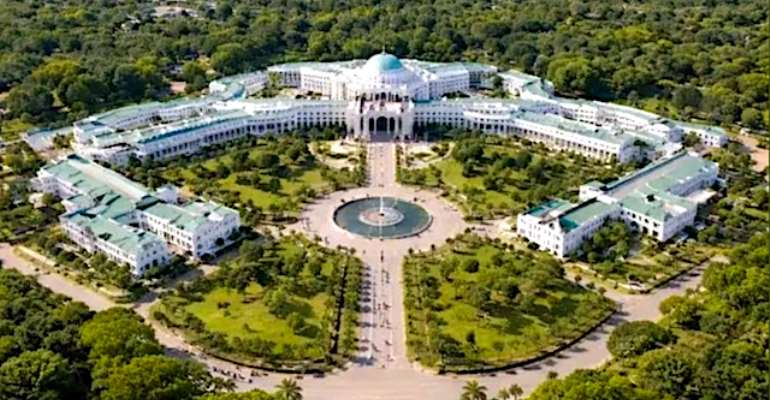
Port Harcourt — When the Presidency announced that the Presidential Villa would exit the national electricity grid after installing a N17 billion solar mini-grid, it was framed as a cost-saving, efficiency-driven energy reform.
But in a country where power failure is not an inconvenience but a structural crisis, the decision quickly transcended administration logistics. It became a national metaphor.
For critics, it is not just Aso Rock going solar. It is Aso Rock leaving Nigeria behind.
A N17 billion exit from a broken gris
Presidential officials defended the move as necessary, citing an annual electricity expenditure reportedly nearing N47 billion.
State House Permanent Secretary, Temitope Fashedemi, said the decision was driven by “excessive billing” and the need for long-term energy sustainability at the seat of power.
But the optics proved politically explosive. At a time when millions of Nigerians endure prolonged blackouts, rising electricity tariffs, and escalating generator dependence, the Presidency’s shift to self-generated solar power has been widely interpreted as a symbolic withdrawal of confidence in the national grid.
For many citizens, it raised a difficult question: If the system is good enough for Nigeria, why is it not good enough for Aso Rock?
Peter Obi: ‘This is not leadership, it is escape’
Opposition leader and Presidential candidate of the National Democratic Party, Mr. Peter Obi, has strongly criticised the development, describing it as evidence of systemic governance failure.
Obi said it was unacceptable for the Federal Government to abandon the national grid while ordinary Nigerians continue to suffer worsening electricity conditions.
“It is incongruous for the seat of power to abandon the national grid because of instability and billing issues, while the ordinary Nigerian citizen is left to endure the same, if not worse conditions,” he said.
“One would expect government institutions to lead efforts to strengthen and expand the grid so that other establishments, and ultimately, citizens, can benefit. If those in authority disconnect themselves from the system, who then will connect the ordinary Nigerians to reliable power?
He argued that the decision reflects deeper structural failure in leadership priorities. “This is not progress; it is an escapist measure that highlights a fundamental governance failure in the power sector,” Obi stated.
While acknowledging that renewable energy solutions like solar power are important for the country’s future, Mr Obi said the move sends the wrong signal about leadership and accountability.
He added that although citizens may not expect every campaign promise to be fulfilled completely, they deserve visible effort, measurable progress, and transparent explanations when targets are not met.
“Promoting renewable energy, as solar systems do, is commendable and necessary for the future. However, this situation reflects a deeper concern: governance lacking compassion and commitment to the governed. You cannot tell the people to fast while feasting yourself, securing yourself while Nigerians remain unsecured.
“Nigerians do not expect 100% fulfilment of promises, but they do expect 100% effort, accompanied by measurable improvements and clear explanations when gaps exist. Leadership must serve the people, not isolate itself from their daily struggles,” he added.
His intervention intensified the political dimension of the debate, framing the issue not merely as energy reform, but as a test of leadership accountability.
A tale of two Nigeria
Public reaction has been sharp, emotional, and deeply divided along class and structural lines.
For many Nigerians, the Aso Rock solar project reinforces what they already believe; that Nigeria operates on two parallel realities: one powered and protected, the other abandoned and overburdened.
On social media, reactions from netizens, particularly on X, captured the anger in raw terms.
@tosinwayne93 wrote: “Who caused the high cost of electricity, fuel and diesel? N17 billion solar system. Wow.”
@Darock07 added: “N17 billion to escape the electricity system they promised to fix. Let that sink in.” While @barralpha1 said: “If the federal government can’t pay the unsustainable energy bill, you can imagine what Nigerians are going through.”
@IkennaOchei questioned governance priorities directly: “This is happening while so many parts of the country, including Lagos, have been without power for more than a week. Nigeria is facing a total power sector collapse.”
@Ruby_Damie wrote bluntly: “Presidential villa has left costly electricity for poor citizens. Nigeria we hail thee.” And @Vickenchi summed up a widely shared sentiment: “Someone that promised you 24 hours electricity has left the grid.”
The symbolism
The symbolismis what makes the controversy politically combustible. Nigeria’s power sector has consumed trillions of naira in reforms, subsidies, and interventions over two decades. Yet the national grid remains unstable, prone to collapse, and unable to deliver consistent electricity supply.
Now, the Presidency itself appears to be building an exit strategy. Energy analysts say this could have unintended consequences.
If the highest office in the land does not rely on the grid, it weakens confidence in ongoing reforms and signals institutional distrust in the system.
“The Presidential Villa’s decision to disconnect fully from the national grid is, in essence, a declaration that the national grid is unfit for purpose,” remarked a management staff of a GenCo, who requested anonymity due to the sensitivity of the matter. “How can the government expect investors and citizens to trust a system that its own highest office deems unreliable?”
CSOs: ‘Tinubu confirms the grid is not reliable’
Environmental and civil society voices see the development as both warning and opportunity. Dr. Fyneface Dumnamene Fyneface, Executive Director of YEAC-Nigeria, said the move exposes a hard truth about Nigeria’s electricity infrastructure.
“The Presidential Villa’s disconnection from the national grid after completing an independent solar mini-grid is commendable,” he said.
“But it confirms what citizens already know: the national grid is no longer trusted by those who manage it.”
He argued that the real policy question is no longer whether solar works, but whether it will be democratised.
“If solar can power Aso Rock 24/7, it proves that renewables are reliable for critical infrastructure,” he said. “The excuse that solar is only for villages is dead.”
But he warned against deepening inequality: “For this not to become ‘light for the Villa, darkness for the people’, government must act.”
Trillions spent, darkness persists
The controversy has also reopened old wounds in Nigeria’s power sector history. Since 1999, successive governments have spent massive sums on power infrastructure reforms, including generation privatisation, transmission upgrades, and subsidy interventions.
Yet electricity supply remains inconsistent. Citizens now see a troubling contrast: decades of investment in a broken grid and a sudden escape from that same grid by the Presidency.
Estimates indicate Nigeria has spent over $30 billion (or more than N30trillion) on the power sector since 1999. These investments span generation, transmission, and distribution projects, though the exact figure remains heavily debated due to off-budget allocations, foreign exchange fluctuations, and multi-ministerial expenditures.
The spending is primarily broken down across various presidential administrations: 1999-2007 (Obasanjo Era): This administration launched a major reform through the National Integrated Power Projects, NIPP. Official audits and government reports cite between $3.5 billion to $10 billion (out of total approvals of $10 billion to $12 billion) was actually utilized. A highly publicize, though contested, debate often floats a $16 billion figure regarding funds committed during this period.
2007–2015 (Yar’Adua & Jonathan Eras): The government officially reported to the Senate that approximately N2.74 trillion (equivalent to roughly $13.38 billion at the time) was invested in the sector by 2015 to construct and complete power stations and transmission lines.
2015–2023 (Buhari Era): Spending continued heavily during this period, with various investigations and civil society groups estimating total capital outlays and interventions to have pushed the total government expenditure past N11 trillion (or over $30 billion) since the return to democracy.
Despite these significant investments, persistent issues with gas supply, grid management, and abandoned projects, Nigeria’s grid capacity frequently struggles to cross 5,000 megawatts, forcing businesses and homes to rely heavily on self-generated power.
For critics, it raises a deeper governance question: Is Tinubu fixing power, or bypassing it?
Investor signal and economic risk
The implications of Aso Rock’s solar migration extend far beyond the Villa’s gates. For the struggling national power sector, it sends a dispiriting message. Experts fear it could further erode public confidence, deter much-needed investment, and demoralize those dedicated to improving the grid.
Economically, the N17 billion investment in a standalone solar solution for one facility, however prestigious, prompts questions about resource allocation.
Critics argue that such funds could be better deployed in strengthening the national grid, thereby benefiting a wider populace and catalyzing broader economic growth.
“While individual solar initiatives are laudable, when the government’s own headquarters opts out of the national system, it creates a perception that the government itself lacks faith in its grand plans for the power sector,” noted an energy policy analyst in Port Harcourt. “This can significantly impact foreign direct investment, as energy stability is a key consideration for investors.”
The final question: reform or resignation
The Presidency’s solar project may eventually reduce operational costs and improve energy efficiency within the Villa. But politically and symbolically, it has triggered a far larger national debate.
Is this a model for decentralised renewable energy adoption? Or is it the clearest signal yet that Nigeria’s national grid is beyond trust, even for those who run it?
As a tweep @jaybutty11806 put it: “It is now that you people will understand electricity problem, President has logged out from NEPA.”
For 230millions of Nigerians still trapped in darkness and at the mercy of the national grid, that line may feel less like a joke, and more like a verdict.