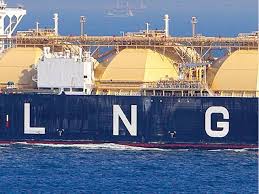
Littleton, Colorado — A potent mix of American ingenuity and full-throated political backing has propelled the U.S. to the top of global LNG exporter rankings, and promoted a narrative that shipments of “freedom gas” will continue climbing to all markets for years to come.
But while U.S. liquefied natural gas exports in 2025 are nearly a third more than those of the next largest exporter, the heavy skew of sales to Europe leaves American LNG vendors at risk of rapid volume downturns as European buyers curb gas use.
The US has exported a record 98 million metric tons of LNG so far in 2025, or 25% of global LNG exports
Further, the U.S. share of exports into the largest region for LNG imports – Asia – is far smaller than rivals Qatar and Australia, which enjoy far more cost-effective shipping times to key markets such as Japan, China and India.
If the U.S. is to cement its role as the preeminent global supplier of LNG – often branded as freedom gas when pitched to allies as an alternative to supplies from authoritarian countries – export flows will need to grow sharply in key markets outside of Europe in areas where the likes of Qatar, Australia, Malaysia and Russia are already well established.
That heightened competition will severely test the U.S. ability to remain the top global LNG supplier, as it will lead to sharply higher transit costs for U.S. exporters and narrower profit margins as sellers compete for deals.
EURO CENTRIC
European nations have accounted for two-thirds of U.S. LNG exports this year, which is the highest concentration of U.S. export flows to a single continent since 2022, when Europe’s demand for LNG spiked following Russia’s invasion of Ukraine.
And although Europe’s total LNG import volumes have jumped by 25% in 2025 from last year, Kpler data shows, Europe’s total LNG import needs have expanded by only 2% since 2022 as the power sector retooled generation sources away from fossil fuels.
With Europe’s utilities expected to continue fast-tracking renewables and battery storage deployment going forward, regional gas demand is likely to decline from the 2030s, resulting in a shrinking market for LNG exporters.
In its latest outlook, the International Energy Agency (IEA) forecasts total European Union gas demand to decline by just over 10% by 2035 due to greater use of electric heat pumps, higher energy efficiencies and more renewables output.
FAR-FLUNG HEADWINDS
To offset shrinking volumes into Europe, U.S. LNG exporters will have to look farther afield, and may have to go head-to-head with other large LNG sellers to grow market share in Asia, which is the top overall LNG importing region.
But to sustainably grow volumes into cost-sensitive markets such as China and India, U.S. exporters may need to undercut rivals while also incurring higher transit costs on each delivery.
So far in 2025, the U.S. share of LNG exports to the top five global LNG importers – Japan, China, South Korea, India and Taiwan – is just 8%, as other exporters such as Qatar and Australia hold far higher Asian market shares.
To grow that share, U.S. LNG will need to be cheaper than what’s being offered by other suppliers.
But lowering sale prices will be a challenge as the costs of delivering the LNG to Asian buyers stands to be over twice that of shipping LNG to mainland Europe.
The journey time for an LNG vessel from Sabine Pass in the U.S. to Rotterdam in the Netherlands is roughly 15 days, according to LSEG.
But the journey time from Sabine Pass to the Dahej port in India is over 30 days, and so marks a doubling in trip time as well as greater LNG boil off during the journey, which will eat into cargo revenues.
Lower sales prices combined with higher transit costs will not just erode profitability, but may also strain exporter creditworthiness as the lengthier journeys will tie up cash flows for longer and may necessitate short-term credit lines.
A pivot from mainly servicing cash-rich customers in Europe to soliciting demand from firms with weaker credit profiles in emerging markets will also raise the overall market risk for LNG exporters, and may lift the cost of credit lines accordingly.
TRADE TENSIONS
Aggressive moves by U.S. LNG exporters to grow market share in Asia could also strain trade ties with the likes of Qatar, which is heavily reliant on gas exports for national earnings and has plans to steeply boost its own LNG export volumes.
Qatar has also pledgedhefty investment in the U.S. over the coming decade – including in facilities that export LNG from the U.S. Gulf coast – and so could renege on those commitments if U.S. LNG export expansions are deemed too disruptive.
Canada, Russia, Australia, Mozambique and Mexico have also announced plans to lift LNG export volumes in the coming years, and so will also be vying for share in the same markets that U.S. exporters will be targeting.
Overall, more supplies from other exporters alongside higher delivery costs to new markets may slow U.S. LNG export growth going forward, and could force LNG exporters to settle for a smaller slice of the global LNG export pie over time.
The opinions expressed here are those of the author, a columnist for Reuters.
Enjoying this column? Check out Reuters Open Interest (ROI), your essential new source for global financial commentary. ROI delivers thought-provoking, data-driven analysis of everything from swap rates to soybeans. Markets are moving faster than ever. ROI can help you keep up. Follow ROI on Linkedin and X.
Reporting by Gavin Maguire; Editing by Himani Sarkar – Reuters