– Pushes clean energy investment
Precious Anga
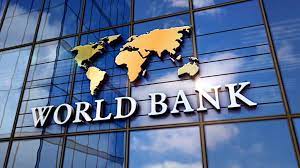
Lagos — The World Bank has called on governments worldwide to accelerate investments in renewable energy, clean technologies and resilient infrastructure, warning that rising oil supply pressures and growing global uncertainty are increasing risks to economic stability and long-term growth.
The Bank said the ongoing squeeze in global oil supply has exposed the dangers of overdependence on volatile fossil fuel markets, particularly for developing economies already battling inflation, fiscal strain and supply chain disruptions.
According to the institution, stronger investments in renewable energy, solar infrastructure, decentralised power systems and clean technologies are becoming essential to protect economies from future energy shocks while supporting industrial growth, job creation and climate resilience.
“Countries become more resilient when they diversify energy sources, including renewables and nuclear energy, because it reduces exposure to energy price shocks,” the World Bank stated.
The Bank stressed that governments must deepen investments in critical infrastructure that supports energy diversification, including solar mini-grids, decentralised electricity systems and reliable transmission networks, especially in remote and climate-vulnerable communities.
Beyond energy systems, the World Bank underscored the importance of sustained investment in human capital, arguing that future economic competitiveness will depend heavily on workforce readiness for emerging industries.
It urged countries to modernise education systems and workforce development programmes to equip workers with skills suited for clean technology, digital services and artificial intelligence-driven industries.
The Bank noted that practical AI applications are already boosting productivity in sectors such as agriculture, where smallholder farmers are using digital tools to detect crop and livestock diseases and improve access to services.
However, it warned that investment in people must go beyond technical training to include quality education, healthcare systems and social programmes capable of strengthening national human capital.
The World Bank further cautioned that the global economy is entering a new phase of heightened uncertainty driven by geopolitical tensions, climate risks, policy instability and rapid technological disruption.
It noted that higher oil prices and tightening global supplies are exerting fresh pressure on public finances, particularly in developing economies where inflationary pressures and widening fiscal deficits are already constraining economic growth.
As governments struggle to balance short-term economic stabilisation with long-term development priorities, the institution warned against cutting productive public investments.
“When faced with fiscal pressure, governments often resort to cutting long-term capital investments. This is not the right response. Evidence shows that reducing investment spending during crises weakens recovery, lowers productivity and wages, and reduces countries’ ability to withstand future shocks,” the Bank said.
Instead, the World Bank advised governments to protect high-impact projects capable of creating jobs, strengthening energy security and boosting productivity, while discontinuing low-value or poorly designed programmes.
The institution also highlighted the need to improve public spending efficiency, noting that nearly one-third of public investment spending is lost globally through inefficiencies, with low-income countries recording even higher losses.
According to the Bank, stronger project appraisal systems, transparent procurement, effective implementation processes and regular infrastructure maintenance could significantly improve value for money and reduce waste.
It added that digital technologies are increasingly helping governments strengthen project monitoring, accountability and spending efficiency, citing countries such as Viet Nam, Cambodia, the Philippines and Mongolia, where reforms in project planning and investment management are already underway.
The World Bank concluded that countries prioritising clean energy investment, efficient public spending and human capital development will be better positioned to navigate persistent global shocks, strengthen energy security and achieve sustainable economic growth.