27 October 2017, Sweetcrude, Luanda, Angola – The Chief Research Economist (ECMR1) of the African development Bank, AfDB, Anthony Simpasa Musonda has shared experience on the impact of financial inclusion on economic growth at the XXI Scientific Technical Conference organized by the Eduardo dos Santos Foundation (FESA) in Luanda. The conference took place from 24-27 October 2017 and was organized under the following theme: “Angola in face of the current global economic and financial order”. Attending the conference, there were entities from government, private sector, civil society and academia, including researchers from countries such as Brazil, India, Jamaica, Portugal and the United States of America.
The event was also honoured with the participation of H. E. Minister of Economy and Planning, Dr. Pedro Luís da Fonseca who praised the organizers for the initiative, particularly, in the current context characterized by the economic slowdown due to lower international oil prices. In his opening remarks, the Minister challenged researchers to come up with innovative and sustainable policy prescriptions that could help Angola reverse the current paradigm of oil dependency and imports of finished goods with limited value addition to the domestic economy. According to the Minister, the government of Angola is committed to implement reforms aimed at accelerating economic growth and competitiveness through investments in infrastructure, skills and technology, access to credit, attraction of FDI, implementation of PPPs and including the provision of incentives for private sector investments in remote areas as a means to reduce regional asymmetries.
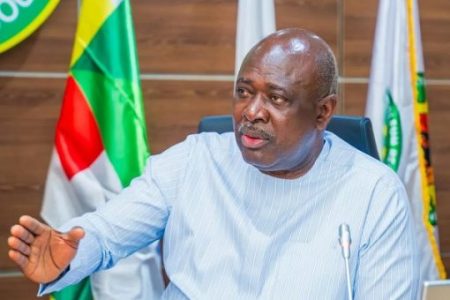
Discussing on the panel related to the importance of financial systems on economic development, the Bank’s Chief Research Economist shared the experience of the impact of financial inclusion on economic growth. Dr. Simpasa begun by highlighting the challenges facing Africa’s efforts to enhance financial inclusion, in general, and Angola, in particular, where it was found that only 30% of the adult population had an account in 2014, down from nearly 40% in 2011. Meanwhile, Angola still outperformed Nigeria and the average for Sub-Saharan Africa countries in regards to the availability of banking facilities (e.g. ATMs and bank branches).
Using time series data for the period from 2004-2014 and covering the African continent, the study led by Dr. Simpasa and with collaboration of Amandine Nakumuryango (ECMR1), Young Yoon (Research Economist Expert), Joel Muzima (Principal Country Economist, COAO) adopted a panel data estimation to find casual effect of financial inclusion on GDP per capita growth in Africa. To isolate the specific and direct effect of financial inclusion on growth for Angola, the econometric model included a dummy variable interacted with financial inclusion indicators (e.g. ATMs, number of deposit accounts with commercial banks, number of branches per 100,000 adults and life insurance premium volume to GDP).
The regression results showed that the effect of financial inclusion on growth (per capita GDP) was negative for all individual indicators of financial inclusion for Angola. According to Dr. Simpasa, this result was counterintuitive, given received evidence that financial inclusion is good for growth. “The results shows there are other intervening barriers as access and use of financial services in Angola remained low. Tackling these barriers could significantly raise economic output and improve people’s income. Most importantly, creating opportunities for productive employment is the pathway to higher income and increased use of financial services to spur growth of the economy,” Dr. Simpasa concluded.
The Bank’s pro-active participation in the XXI FESA’s conference is part of the ECVP’s strategic goal of supporting regional member states with demand-driven research products that take into account the countries’ economic and social developmental challenges and provide endogenous policy prescriptions to achieve sustainable and broad-based economic growth and development, and therefore, contribute to the achievement of the Bank’s High 5s of Improving the Quality of Life for the People of Africa.