Close Menu
    Facebook X (Twitter) Instagram
    Facebook X (Twitter) Instagram
    SweetCrudeReportsSweetCrudeReports
    Subscribe
    • Home
    • Oil
    • Gas
    • Power
    • Solid Minerals
    • Labour
    • Financing
    • Freight
    • Environment
    • Community Development
    • Renewable Energy
    • E-Editions
    SweetCrudeReportsSweetCrudeReports
    Home » Crisis-hit Ghana increases public servant salaries by 30%

    Crisis-hit Ghana increases public servant salaries by 30%

    January 13, 2023
    Share
    Facebook Twitter LinkedIn WhatsApp
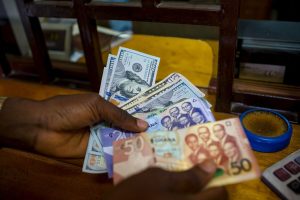
    *A man trades U.S. dollars for Ghanaian cedis at a currency exchange office in Accra, Ghana, File. REUTERS/Francis Kokoroko

    Accra — Ghana’s government and trade unions on Thursday agreed to increase all public servants’ salaries by 30% for 2023, they said in a joint statement, as the country struggles to reduce debt and tackle rampant inflation.

    The West African gold, oil and cocoa producer is battling its worst economic crisis in a generation.

    The local cedi dropped heavily against the dollar last year as government spending cuts and central bank interest rate hikes failed to tame inflation, which rose to a new high of 54% last month.

    Trade unions representing public service employees started negotiating salary rises with the government in November, a few months after hardship spurred street protests that pushed the government to seek help from the International Monetary Fund (IMF).

    The two parties on Thursday settled on a 30% increase to base pay across board, effective from Jan. 1, 2023.

    Ghana’s government announced sweeping spending cuts in March, including a lowering of ministers’ salaries, to reduce the deficit, contain inflation and slow the cedi’s slide.

    But it also increased a cost-of-living allowance for public workers by 15% in July, citing the impact of “global challenges” on citizens.

    Ghana secured a staff-level agreement with the IMF for a $3 billion, three-year support package in December, but needs to restructure its debt to access the funds.

    The government launched a domestic debt exchange programme last month and later said it would default on nearly all of its $28.4 billion of external debts.

    It asked to restructure its bilateral debt under the G20 common framework platform this week.

    *Christian Akorlie; Sofia Christensen; Editing: Alex Richardson – Reuters

    Follow us on twitter

    Related News

    Nigeria, World Bank strengthen partnership to build capacity of institutional workforce

    PTDF, Air Force Institute deepen partnership on energy skills

    TotalEnergies launches 2026 employee share offering

    E-book
    Resilience Exhibition

    Latest News

    Nigeria advances electric mobility standards as stakeholders unite behind national framework

    June 17, 2026

    Nigeria’s ex-oil minister Alison-Madueke cleared of all charges in UK corruption trial

    June 17, 2026

    Navy uncovers hidden 17,000-litre crude oil theft hub in Delta

    June 17, 2026

    Heirs Energies launches green corridor project to boost climate resilience in Rivers

    June 17, 2026

    Cooking gas prices could drop below ₦1,100/kg if reforms succeed

    June 17, 2026
    Demo
    Facebook X (Twitter) Instagram
    • Opec Daily Basket
    • Oil
    • Power
    • Gas
    • Freight
    • Financing
    • Labour
    • Technology
    • Solid Mineral
    • Conferences/Seminars
    • Community Development
    • Nigerian Content Initiative
    • Niger-Delta Question
    • Insurance
    • Other News
    • Focus
    • Feedback
    • Hanging Out With Markson

    Subscribe for Updates

    Get the latest energy news from Sweetcrudereports.

    Please wait...
    Please enter all required fields Click to hide
    Correct invalid entries Click to hide
    © 2026 Sweetcrudereports.
    • About Us
    • Advertise with us
    • Privacy Policy

    Type above and press Enter to search. Press Esc to cancel.