Mkpoikana Udoma
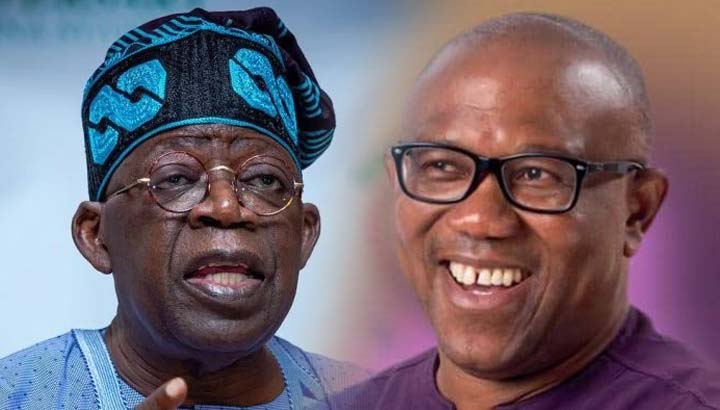
Port Harcourt — A fresh political confrontation erupted yesterday the presidential candidate of NDC, Peter Obi, called on President Bola Ahmed Tinubu to resign over what he described as worsening economic hardship, insecurity and governance failures, prompting a swift and strongly worded rebuttal from the Presidency.
Obi, in a statement titled “Owning Up to Leadership Failures and Political Responsibility,” argued that political leaders must be held accountable for unmet promises and poor governance outcomes.
Drawing comparisons with the resignation of the British Prime Minister, Keir Starmer, amid public dissatisfaction over economic performance and unfulfilled pledges, Obi said leaders should accept responsibility when they fail to deliver.
“During the 2023 election campaign, President Bola Ahmed Tinubu made several promises, including improved electricity supply,” Obi stated. “At present, however, these conditions have worsened. Electricity supply remains unreliable, insecurity has intensified in many areas, including kidnappings, and economic hardship has deepened rather than eased.”
The former Anambra State governor argued that public debt had risen sharply while living conditions continued to deteriorate, insisting that accountability should remain a cornerstone of democratic governance.
“I, therefore, join Nigerians of goodwill in calling for the resignation of the President over monumental failure in governance,” Obi declared, adding that such a move would help entrench a culture of responsibility and accountability in public office.
However, the Presidency dismissed Obi’s position as “childish,” “misplaced,” and an attempt to distract from what it described as the administration’s economic and governance achievements.
In a statement signed by presidential spokesman Bayo Onanuga, the Presidency argued that Nigeria operates a presidential system with constitutionally fixed terms, unlike the parliamentary structure in the United Kingdom.
“Peter Obi’s latest comments calling for President Bola Tinubu’s resignation, based on a comparison with the British prime minister’s voluntary exit, are not only misplaced but also reflect a selective and distorted view of Nigeria’s realities since 2023,” Onanuga said.
The Presidency pointed to recent election victories by the ruling APC in various constituencies as evidence of continued public support for the President and his administration.
Defending the government’s economic record, Onanuga said President Tinubu inherited a fragile economy and had since implemented reforms that were producing measurable results.
“Since then, the Nigerian economy has posted positive GDP growth every quarter, surpassing the global average,” he said. “Trade surpluses have been recorded consistently, foreign reserves have hit new highs, oil production has risen, and federation revenue has more than doubled.”
The Presidency also highlighted improvements in oil production, rising government revenues, growth in foreign investment, expansion of infrastructure projects and reforms in the electricity sector as evidence that the administration was delivering on key objectives.
On security, Onanuga said government forces had intensified operations against insurgents and criminal groups, leading to the rescue of kidnapped victims and the neutralisation of terrorist leaders.
“President Tinubu has not only sustained but also expanded investments in security by deploying advanced technologies and drones,” he said.
The statement further accused Obi of ignoring progress recorded in areas such as student loans, compressed natural gas adoption, infrastructure development and electricity reforms.
“Peter Obi’s call for President Tinubu’s resignation is childish and hollow. It is not a call to hold the leader accountable. It is merely a political grandstand and an unworthy distraction,” Onanuga stated.
The exchange marks one of the sharpest political clashes between the opposition figure and the Presidency in recent months and is expected to further intensify debate over the state of the economy, governance performance and political accountability ahead of the 2027 general elections.
While Obi insists that worsening living conditions justify demands for leadership responsibility, the Presidency maintains that ongoing reforms are laying the foundation for long-term economic recovery and national development.