Mkpoikana Udoma
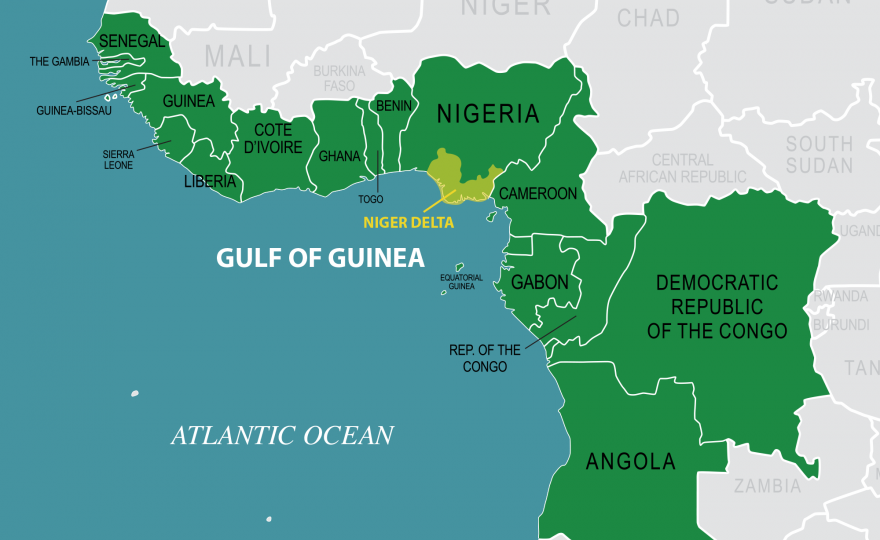
Port Harcourt — Concerns over chronic underfunding of marine ecosystems in the Gulf of Guinea have come under renewed scrutiny as researchers from the School of Geography and Sustainable Development, University of St Andrews, United Kingdom, launched a study aimed at uncovering why coastal and marine environments continue to receive significantly less international funding despite their economic and environmental importance.
The research, funded by the Norwegian Institute of International Affairs, is examining local community participation in natural resource governance and investigating the funding disparities affecting marine ecosystems across the Gulf of Guinea, particularly in Nigeria’s Niger Delta region.
Speaking during a focus group session in Port Harcourt, Rivers State, lead researcher, Dr. Cyril Effiong, said the study was designed to either validate or challenge findings from an earlier mapping exercise conducted by the institution.
“The aim of the session is to examine how decisions about nature and natural resources are made and implemented within the Gulf of Guinea, particularly how these international actors interact,” Effiong said.
According to him, the research seeks to determine whether local communities are adequately represented in environmental governance and decision-making processes, while also assessing the extent of environmental impacts on coastal populations.
“We have done an initial mapping and from that mapping we noticed that local people are excluded in environmental governance. So this focus group is either to confirm whether what we mapped was true or it’s not true,” he stated.
Effiong noted that the research team had already engaged with the Federal Ministry of Environment and several government agencies before extending consultations to civil society groups and community representatives.
“And we have also had opportunity of interfacing with the Federal Ministry of Environment and also different government agencies and now we are interfacing with different NGOs and community members. We hope that this forum will bring out the core aspect of the work and confirm our findings that we initially did from our mapping,” he added.
A key concern raised by the researcher was the apparent neglect of marine ecosystems by international funding institutions despite the critical role coastal resources play in supporting livelihoods, food security and economic activities.
“We noticed that marine seems to be the least in terms of funding and because marine is the least, when we looked at land and other ecosystems, we saw marine as the least that international organizations are funding,” he said.
“So we raised a question, why are marine ecosystems not included in the funding? That necessitated the research; to trace the gap that has existed and understand why fishing communities and marine-dependent livelihoods are not receiving the same level of support as other sectors.”
He cited examples of major international interventions that focus on erosion control and flooding while providing limited attention to coastal and marine environments.
“For example, the Global Environment Facility is funding projects in erosion and flooding, but when it comes to the coastal areas where Niger Delta people dwell, we seem to see that much has not been done in terms of funding. Yet these communities are part of the Gulf of Guinea,” Effiong stated.
The researcher expressed optimism that the findings would help redirect international attention and financing toward marine conservation, fisheries development and coastal resilience initiatives.
“We hope that at the end of the research, the result will raise the bar in terms of focusing much more funding on the marine aspect of natural resources,” he said.
Participants at the session, drawn from fishing communities, farming groups, civil society organizations and natural resource users, painted a grim picture of worsening environmental conditions affecting livelihoods across the Niger Delta.
Many lamented that pollution, climate change, flooding and environmental degradation have severely reduced fish stocks and agricultural productivity, threatening food security and household incomes.
Dr. Sam Alubari, Research Director at the Community for Sustainable Development and Innovation, CDSI, described the environmental situation in the region as dire.
“The situation in Ogoni and the Niger Delta region is lamentable and devastating,” Alubari said.
Similarly, Engr. Abali Chimamkpa, a farmer and community-based environmental monitor from Rumuekpe in Emohua Local Government Area of Rivers State, said oil industry activities had inflicted severe environmental and human costs on local communities.
“A lot of persons have lost their lives as a result of oil operations in my local community, Rumuekpe,” he stated.
Also speaking, Mercy Elemchukwu-James, Executive Director of Ese Usamali Foundation for Rural Development, EUFORDe, highlighted the disproportionate impact of environmental challenges on women and children.
She said persistent flooding and climate-related disruptions had worsened food shortages in the Orashi region of Rivers State, placing additional pressure on vulnerable households.
The study comes at a time when the Gulf of Guinea remains one of Africa’s most strategic maritime zones, supporting fisheries, shipping, offshore oil and gas operations and coastal economies. However, stakeholders argue that inadequate investment in marine ecosystem protection could undermine both environmental sustainability and long-term economic development across the region.
The outcome of the research is expected to provide critical insights for governments, development partners and international funding agencies seeking to strengthen marine governance and improve funding allocation for coastal communities across the Gulf of Guinea.