
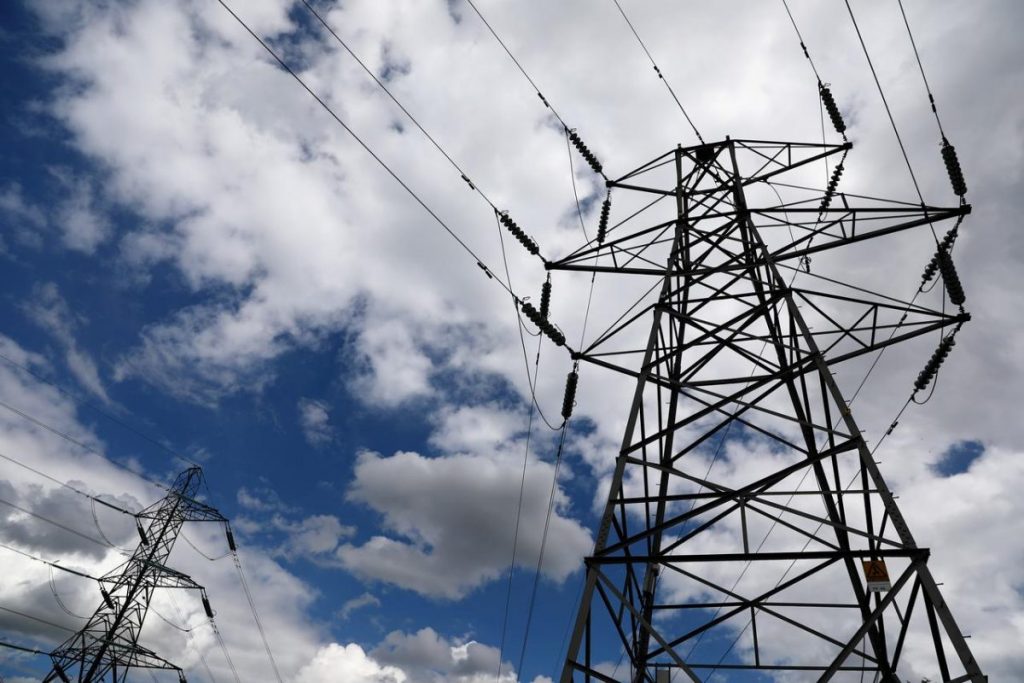
Abuja — Nigeria’s electricity supply chain is heading for a structural fracture in the third quarter of 2026, as gas producers increasingly divert molecules away from the struggling national grid and towards creditworthy industrial consumers, the Society of Energy Editors (SEE) has projected in its latest quarterly energy outlook.
The forecast, released Tuesday, describes Q3 as a potential “breaking point” for the nation’s legacy electricity distribution framework, arguing that the long-held assumption—that more gas automatically translates to more power is collapsing under the weight of market logic and institutional illiquidity.
The Three-Tiered Grid
At the core of the Society’s analysis is what it terms the “three-tiered grid” reality now defining Nigeria’s power landscape.
The first tier is the familiar but increasingly frail legacy national grid, operated by the Transmission Company of Nigeria and served by electricity distribution companies, or DisCos, that remain heavily dependent on the centralised Bulk Electricity Trading (NBET) platform for their power purchase arrangements.
The second tier comprises the new state-level mini-grids and embedded generation networks, now fully operational in over a dozen states following the full activation of the Electricity Act 2023. These networks, though modest in scale, are steadily siphoning industrial and commercial load away from the national system.
The third, and fastest-growing, tier is the burgeoning industrial captive power sector—cement plants, steel mills, data centres, and large manufacturing concerns that have lost patience with the grid’s unreliability and have constructed their own gas-to-power infrastructure, often located physically within their factory fences.
It is this third tier that is reshaping the gas-to-power equation in ways that will become painfully visible during Q3, SEE warns.
The Off-taker Hierarchy
Q3 marks the seasonal peak for thermal gas demand, as the dry season’s harmattan haze gives way to the wet season’s humidity, and as air conditioning and cooling loads surge across commercial and residential consumers. Historically, this has been a period of strain on the gas network, with the power sector competing—and often losing out to industrial users for available molecules.
But the dynamics have now shifted. The competition is no longer between power and industry for gas; it is between different classes of power consumers for the gas that producers are willing to sell on credit.
“Gas producers will continue to prioritise creditworthy industrial off-takers over the illiquid NBET ecosystem,” the outlook states bluntly. “The cement, steel, and data centre operators pay on time, in hard currency or its naira equivalent at market-reflective rates. The DisCos, by contrast, represent a chronic payment risk that no commercial gas supplier can responsibly ignore.”
The result is a growing divergence in the quality of electricity service experienced by different categories of Nigerian consumers. Industrial clusters with direct gas connections enjoy increasingly stable power. Consumers tethered to the DisCos, however, face a deteriorating reality.
The AKK Paradox
The analysis highlights a troubling paradox: the anticipated completion and ramp-up of the Ajaokuta-Kaduna-Kano (AKK) gas pipeline corridor will increase the physical availability of gas molecules in the northern axis of the grid, yet this supply-side improvement is unlikely to translate into better power for households in Kano or Kaduna.
“Despite an increase in available gas molecules from the AKK pipeline corridor, we project a worsening of load-shedding in areas reliant on the central grid,” the Society forecasts.
The explanation lies in the payment chain. Even if gas arrives at the doorstep of a northern power plant, the plant’s operator must still sell the generated electricity to a DisCo, which must collect from end-users and remit to NBET, which must then pay the generation company, which must finally settle its gas invoice. A single weak link in that chain and the DisCos, by most financial metrics, constitute several weak links causes the entire sequence to seize up.
Gas producers, having been burned repeatedly by this cycle of payment arrears, are simply declining to nominate volumes to the power sector at the levels grid operators request. Instead, they are locking in bilateral contracts with industrials who sit outside the NBET settlement system entirely.
NERC and the Autonomy Imperative
For the Society of Energy Editors, the Q3 outlook drives home an uncomfortable conclusion: Nigeria’s power problem is no longer fundamentally a gas supply problem. It is a regulatory and financial discipline problem.
“The cure for Nigeria’s power woes is no longer just gas supply,” the report asserts. “It is the full financial autonomy of the Nigerian Electricity Regulatory Commission (NERC) to enforce DisCo performance bonds without political interference.”
The Society argues that the Electricity Act provides NERC with the statutory tools to revoke licences, enforce minimum service standards, and impose financial penalties on non-performing utilities. What has been lacking, in the editors’ assessment, is the political will to deploy those tools against entities that, in some cases, are controlled by politically connected investors or by state governments unwilling to countenance tariff enforcement in their domains.
Until NERC is empowered and funded to act as a genuinely independent regulator, the report suggests, the incentives that drive gas molecules away from the national grid and towards industrial enclaves will only intensify.
The Decentralization Endgame
The outlook frames Q3 not as a crisis to be averted, but as an acceleration of a structural transformation already underway. The decentralization of Nigeria’s electricity industry, enabled by the Electricity Act and driven by the failure of the centralized model, is now irreversible.
The question for policymakers is whether they will manage this transition deliberately or simply watch it unfold chaotically. In the managed scenario, the legacy grid becomes a leaner, more resilient backbone serving those who cannot afford captive generation, while state-level markets and industrial micro-grids absorb the premium load. In the chaotic scenario, the grid’s decline becomes self-reinforcing: as paying customers defect to captive power, the DisCos’ revenue base shrinks further, their ability to pay generators erodes, and the service to remaining grid-dependent consumers predominantly residential and small commercial users collapses entirely.
“The third quarter will not invent these dynamics,” the report concludes. “It will simply reveal them with greater clarity than many are prepared for.”


