Precious Anga
Lagos — Environmental and mining experts have warned that Nigeria’s push to expand mineral extraction could deepen environmental degradation and social tensions unless stronger governance frameworks, regulatory enforcement and community safeguards are put in place.
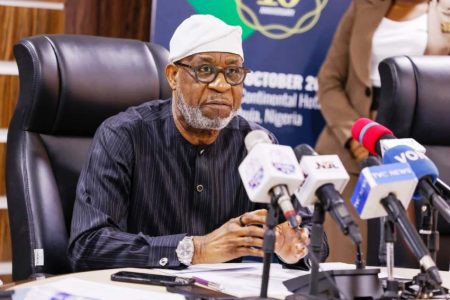
The warning was issued at the 2026 Conference of the Nigerian Environmental Study/Action Team (NEST) held at the National Universities Commission auditorium in Abuja, where stakeholders examined the environmental and socio-economic implications of the country’s growing mining sector.
Speaking on the conference theme, “Mining for Economic Growth: Promoting Sustainable Environment and Conflict Management in Nigeria,” Vice-Chancellor of the University of Nigeria, Nsukka, Prof. Simon Ortuanya, said while mining offers significant opportunities for industrial growth, revenue generation and economic diversification, its benefits could be undermined by environmental damage and social instability if not properly managed.
Ortuanya stressed the need for stronger regulatory institutions, increased funding for environmental oversight agencies, stricter enforcement of rehabilitation obligations and tougher penalties for operators who violate environmental standards. He also advocated greater transparency in mineral licensing and administration through enhanced digital systems and alignment with international transparency standards.
The university don further called for the formalisation of artisanal and small-scale mining activities through legal recognition, capacity building and environmental compliance programmes, noting that the sub-sector remains a critical part of Nigeria’s mining ecosystem.
Also speaking, Prof. Emmanuel Tembe of Joseph Sarwuan Tarka University, Benue State, urged the Federal Government to strengthen environmental justice by making environmental rights enforceable in law. He recommended compulsory rehabilitation bonds for mining operators, the establishment of community crisis response funds and stricter implementation of both Environmental and Health Impact Assessments.
Chairman of the NEST Board of Directors, Prof. Chinedum Nwajiuba, expressed concern over the scale of environmental damage linked to resource extraction across the country. He cited decades of ecological degradation in the Niger Delta, abandoned tin mining sites in Plateau State, coal mining areas in Enugu, surface mining locations in Kogi and bitumen exploration zones in Ondo State as evidence of persistent environmental neglect.
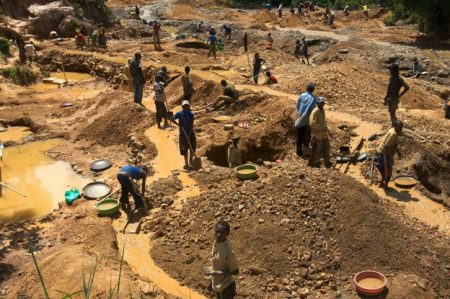
Nwajiuba noted that mining activities in parts of the North-West and North-Central have contributed to land degradation, insecurity and declining agricultural productivity, while widespread artisanal mining in erosion-prone communities continues to worsen environmental challenges. According to him, despite the extraction of valuable minerals, many mining communities remain trapped in poverty with limited evidence of corresponding economic benefits.
Describing the challenges facing Nigeria’s mining industry as complex and deeply rooted, he attributed many of the problems to weak governance structures, inadequate legislation and poor enforcement. He called on policymakers, researchers, civil society organisations and industry stakeholders to develop practical solutions capable of balancing economic growth with environmental sustainability.
Executive Director of NEST, Prof. Emmanuel Nzegbule, also urged stronger collaboration among government agencies, mining operators, host communities and environmental groups. He said Nigeria’s efforts to diversify its economy through mining must be accompanied by deliberate measures to address environmental degradation, security concerns and community conflicts associated with mineral exploitation.
He maintained that while Nigeria’s vast mineral deposits present significant opportunities for economic transformation, sustainable development can only be achieved through responsible resource management, effective regulation and long-term environmental stewardship.