Precious Anga
Lagos — The rapid global adoption of electric vehicles (EVs) is beginning to reshape oil demand patterns, with the International Energy Agency (IEA) reporting that battery-powered vehicles displaced an estimated 1.7 million barrels of oil per day in 2025 as worldwide sales surpassed 20 million units for the first time.
According to the IEA’s latest Global EV Outlook 2026, global EV sales rose by 20 per cent last year, accounting for one in every four new vehicles sold worldwide. The agency projects sales will climb further to 23 million units in 2026, representing about 28 per cent of total global car sales despite economic uncertainties and ongoing geopolitical tensions in energy markets.
The report highlights the growing influence of electric mobility on the global energy landscape, noting that the transport sector currently accounts for nearly half of worldwide oil consumption. As a result, the steady shift away from petrol and diesel-powered vehicles is emerging as a major factor shaping future crude demand.
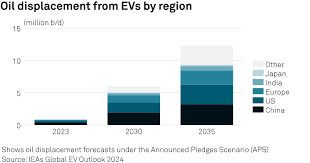
The IEA estimates that oil displacement from EVs could nearly triple to about five million barrels per day by 2030 as adoption accelerates across major economies. For oil-producing nations such as Nigeria, the trend underscores the long-term challenge posed by the global energy transition, even as elevated crude prices continue to support government revenues in the short term.
Europe recorded one of the strongest performances among major markets in 2025, with EV sales rising by more than 30 per cent and accounting for 28 per cent of total vehicle purchases. The IEA attributed part of the growth to rising fuel prices, which have strengthened the economic appeal of electric vehicles.
“The recent increase in oil prices following tensions in the Middle East has further improved the cost advantage of driving electric vehicles,” the agency noted, adding that fuel savings for EV owners in the European Union increased by about 35 per cent compared to the previous year.
China retained its position as the world’s largest electric vehicle market, with EVs accounting for nearly 55 per cent of all new vehicles sold in the country. Although growth moderated slightly, China continued to dominate global EV manufacturing, producing nearly 75 per cent of all electric vehicles and more than 80 per cent of the world’s battery cells in 2025.
Emerging markets also posted impressive growth. EV sales more than doubled across Southeast Asia, driven largely by strong demand in Vietnam, Indonesia and Thailand, where governments continue to promote cleaner transportation and reduce dependence on imported fuels.
While global EV sales declined by eight per cent in the first quarter of 2026 due to policy-related slowdowns in China and the United States, the IEA maintained a positive outlook. Preliminary data for April showed EV sales in China exceeding 60 per cent of total monthly vehicle sales, signalling continued momentum in the world’s largest market.
Beyond transportation, the growing adoption of electric vehicles is expected to increase electricity consumption significantly. The IEA projects that EV-related power demand could exceed 1,500 terawatt-hours by 2035, more than six times current levels. However, the agency noted that this would add only around four per cent to total global electricity demand.
The report reinforces the view that electric mobility is moving from a niche market to a mainstream transportation solution, with implications that extend far beyond the automotive industry. As battery technology improves and production costs continue to fall, the pace of EV adoption is expected to accelerate, gradually reducing the world’s dependence on oil and reshaping the future of global energy markets.