Precious Anga
Lagos — The global push toward large-scale renewable energy is accelerating, with countries including China, the United States and India ramping up development of massive solar projects as governments seek cleaner, cheaper and more secure energy sources.
The trend comes as solar technology becomes increasingly competitive, driven by falling panel prices, improved efficiency and rising investments in clean energy infrastructure.
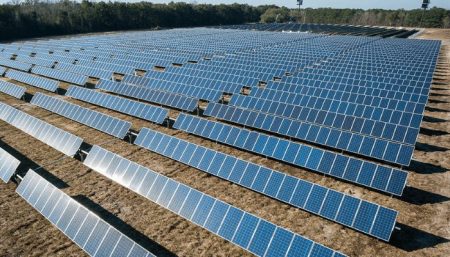
Industry analysts say the next phase of the energy transition is being defined by “giga-scale” solar parks sprawling renewable projects capable of generating tens of gigawatts of electricity to power major cities, industries and digital economies.
China currently leads the race with the 16.9-gigawatt Talatan Solar Park in Qinghai province, one of the world’s largest solar installations. Located in an alpine desert on the Tibetan Plateau, the project benefits from strong sunlight, cold mountain air and high-altitude conditions that improve solar panel efficiency.
Electricity generated from solar and wind facilities in the region is reported to cost roughly 40 per cent less than coal-fired power, reinforcing China’s aggressive expansion into renewable energy. Authorities are now scaling up the project further by integrating solar, wind and hydroelectric capacity.
The United States is also advancing its renewable ambitions. In California, Golden State Clean Energy is pursuing a proposed 21-gigawatt solar development spread across roughly 200 square miles of land a project designed to supply power to major population centres including Los Angeles and Silicon Valley.
The development will depend heavily on battery storage systems and new transmission infrastructure to deliver electricity beyond daylight hours. Project developers argue that large-scale generation is essential to justify the multibillion-dollar investment required for high-voltage transmission networks.
While concerns over land use continue to fuel debate around utility-scale solar expansion, developers note that parts of California targeted for solar deployment are increasingly struggling with severe drought conditions, making traditional agricultural activities less viable.
India is equally positioning itself at the forefront of the renewable energy transition through the Khavda Renewable Energy Park in Gujarat. The project, backed by billionaire industrialist Gautam Adani, is targeting 30 gigawatts of combined solar and wind capacity, supported by large battery storage systems to ensure round-the-clock electricity supply.
Construction began in 2023, with early power generation already feeding consumers in Mumbai and neighbouring regions through dedicated transmission infrastructure. Current generation capacity from the park stands at around 13 gigawatts.
The emergence of these mega-projects reflects a broader global strategy to diversify energy systems, strengthen energy security and reduce dependence on fossil fuels amid climate concerns and market volatility.
The momentum in renewable energy development is unfolding against a mixed backdrop in global energy markets. On Monday, Brent crude traded around $94.64 per barrel, while WTI crude slipped to $91.76. Natural gas prices edged higher, highlighting ongoing volatility across traditional energy markets.
Energy experts say large-scale solar investments could play an increasingly important role in shielding economies from fossil fuel price shocks while helping governments meet climate and industrialisation goals.
As countries compete to build the next generation of clean energy infrastructure, the global race for the world’s biggest solar farms appears only to be gaining speed.