Precious Anga
Lagos — Despite years of investment in power generation and transmission infrastructure, nearly half of Nigerian households still lack reliable access to electricity, underscoring the need for a broader and more diversified energy strategy.
According to Oando Clean Energy Limited’s National Wind Resource Capacity Report, developed in partnership with the Nigeria Wind Energy Council, about 44.6 per cent of households across the country remain without electricity access. The figure highlights a persistent challenge that continues to limit economic growth, industrial development and social progress.
For millions of Nigerians, the electricity deficit extends beyond statistics. It affects businesses struggling with high operating costs, health facilities dependent on unreliable power sources and students whose educational opportunities are constrained by energy poverty.
For decades, national energy discussions have centred on increasing generation capacity, strengthening transmission networks and expanding grid infrastructure. While these remain important priorities, experts argue that solving Nigeria’s electricity crisis requires a more comprehensive approach that embraces multiple energy sources and technologies.
Reliable electricity remains the foundation of modern economic activity. It powers industries, drives innovation, supports healthcare delivery and improves educational outcomes. Without dependable power supply, productivity suffers, investment slows and communities remain trapped in cycles of underdevelopment.
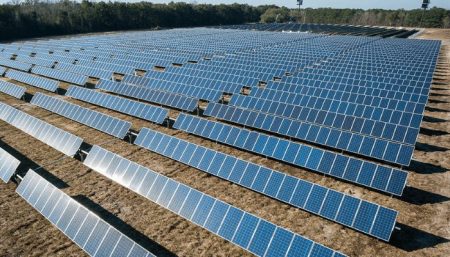
The report argues that Nigeria can no longer afford to depend on a single pathway to electrification. While solar energy has emerged as a key pillar of the country’s energy transition agenda, gas-fired generation continues to provide essential support for grid stability and industrial operations, while hydropower remains a significant renewable energy source.
Global experience shows that countries that have successfully expanded electricity access rely on a combination of technologies tailored to their unique geographical and economic realities. Energy diversification improves system resilience, strengthens reliability and reduces dependence on any single source of generation.
Nigeria’s challenge is not solely about producing more electricity. It is equally about deploying the right mix of energy solutions to meet the varying needs of different regions, industries and communities. What works in one part of the country may not be the most efficient solution elsewhere.
Against this backdrop, wind energy is attracting renewed attention as a potential contributor to Nigeria’s future energy mix.
Globally, wind power has evolved into one of the most mature renewable energy technologies. According to the International Energy Agency, global installed wind capacity surpassed one terawatt in 2023, reflecting its growing role in national electricity systems around the world.
Yet wind energy has historically played a limited role in Nigeria’s energy planning, largely due to insufficient local data on commercially viable wind resources.
The National Wind Resource Capacity Report seeks to address that gap by providing detailed assessments of wind potential across different parts of the country. The study identifies commercially viable wind resources in sections of the northern highlands and coastal corridors, suggesting that wind energy could complement existing investments in solar, gas and hydropower.
Rather than competing with other energy sources, the report positions wind as an additional tool available to policymakers and investors seeking practical solutions to Nigeria’s electricity access challenge.
The significance of the findings extends beyond wind energy itself. They reinforce the broader argument that closing Nigeria’s electricity gap will require a diverse energy portfolio supported by long-term policy consistency, targeted investment and coordinated infrastructure development.
With nearly half of the population still lacking reliable electricity access, experts say no single technology, policy initiative or infrastructure project can deliver the solution on its own.
Achieving universal electricity access will require Nigeria to maximise every commercially viable energy resource available. As the country pursues industrialisation, economic diversification and improved living standards, the debate is no longer whether energy diversification is necessary, but how quickly it can be achieved.
For millions of Nigerians waiting for reliable power, every workable solution counts.