Precious Anga
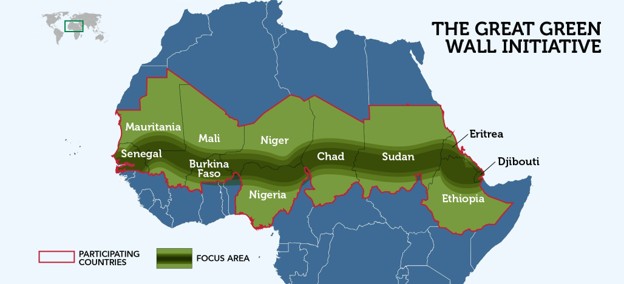
Lagos — Nigeria has reaffirmed its commitment to environmental restoration, biodiversity conservation and climate resilience, positioning the Great Green Wall Initiative as a key vehicle for tackling desertification and ecological degradation across the country’s northern region.
The renewed commitment was highlighted at the 8th Global Environment Facility (GEF) Assembly in Samarkand, Uzbekistan, where global leaders, policymakers and development partners gathered to advance international cooperation on climate action, sustainable development and ecosystem restoration.
Director-General of the National Agency for the Great Green Wall (NAGGW), Saleh Abubakar, said Nigeria remains focused on expanding land restoration efforts, strengthening environmental governance and building partnerships that can accelerate climate adaptation across vulnerable communities.
Abubakar, who was part of Nigeria’s delegation led by the Minister of Environment, Balarabe Abbas Lawal, said the country’s participation at the high-level gathering reflects the Federal Government’s determination to address the growing impact of climate change, particularly in the 11 frontline states most affected by desertification.
He noted that environmental degradation continues to threaten agricultural productivity, food security and livelihoods across large parts of northern Nigeria, making ecosystem restoration an economic and social necessity rather than simply an environmental objective.
According to him, the Great Green Wall Initiative remains one of the country’s most strategic responses to land degradation, with the potential to restore damaged ecosystems, improve soil productivity, strengthen climate resilience and create sustainable sources of income for local communities.
Abubakar also stressed the need for deeper collaboration with international development partners to mobilise technical expertise, financing and institutional support required to scale up restoration efforts across the Sahel region.
He explained that restoring degraded land goes beyond environmental protection, noting that healthier ecosystems support food production, reduce poverty, improve water security and strengthen community resilience against climate shocks.
The NAGGW chief called for increased global support to help Nigeria accelerate ongoing efforts to reclaim degraded landscapes, empower local communities and promote sustainable land management practices.
The Great Green Wall Initiative, which spans several African countries, is widely regarded as one of the continent’s most ambitious environmental programmes. The initiative seeks to combat desertification, restore degraded land and create economic opportunities across the Sahel, a region increasingly vulnerable to climate change.
Discussions at the GEF Assembly also focused on biodiversity conservation, climate resilience, sustainable agriculture and water resource management, with participants emphasising the need to integrate environmental sustainability into broader economic development strategies.
Stakeholders at the forum noted that investments in environmental protection generate significant economic returns by improving public health, supporting agricultural productivity and creating opportunities for sustainable growth.
The assembly, held from May 30 to June 6 and coinciding with the 2026 World Environment Day, reinforced the growing global consensus that climate action, ecosystem restoration and economic development must advance together.
For Nigeria, the message was clear: restoring degraded land, strengthening climate resilience and protecting natural resources are becoming increasingly important to achieving long-term food security, environmental stability and sustainable economic development.