Precious Anga
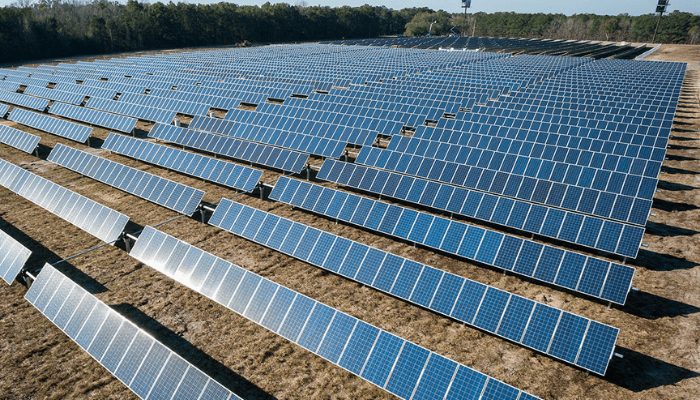
Lagos — Nigeria is positioning solar energy at the centre of its long-term electricity strategy, with plans to develop 53 large-scale solar projects valued at approximately $11 billion and expand installed solar generation capacity to 209,000 megawatts by 2050.
The ambitious target, highlighted in a new industry report by IIR, underscores the Federal Government’s growing reliance on renewable energy to close the country’s electricity access gap, diversify the energy mix and support its net-zero emissions commitment.
According to the report, the 53 utility-scale solar projects currently under development represent one of the largest renewable energy investment pipelines in Africa. The projects are expected to strengthen electricity supply, attract private capital and accelerate Nigeria’s transition towards cleaner sources of energy.
Beyond utility-scale generation, the government is also intensifying efforts to expand electricity access through decentralised renewable energy systems. Central to that strategy is a nationwide programme being implemented by the Rural Electrification Agency (REA), which targets the deployment of more than 1,300 solar mini-grids and off-grid power systems across underserved and unserved communities.
The initiative includes 250 interconnected mini-grids designed to feed electricity into the national grid while providing reliable power to communities that have historically remained outside the reach of conventional electricity infrastructure.
The programme is supported by $750 million in public sector funding and is expected to mobilise an additional $1.1 billion in private investment, creating one of the largest publicly funded renewable energy programmes globally.
Managing Director of the REA, Abba Aliyu, described the initiative as a transformative intervention that will reshape Nigeria’s electricity landscape and significantly improve energy access nationwide.
According to him, the programme reflects a deliberate effort by the Federal Government to establish renewable energy as a major pillar of the country’s power sector while reducing dependence on costly and polluting diesel generation.
Aliyu noted that the initiative is expected to provide electricity access to about 17.5 million Nigerians within three years, equivalent to roughly 20 per cent of the country’s population.
Nigeria has already recorded substantial progress in the deployment of renewable energy infrastructure. Industry data show that more than 1,000 mini-grids have been installed across the country, with the REA financing a significant portion of the projects.
The country’s Distributed Access through Renewable Energy Scale-up (DARES) programme, supported by the World Bank, is also driving investments in solar mini-grids, standalone solar systems and battery storage solutions. The programme aims to replace more than 250,000 diesel generators currently used by households and businesses, reducing energy costs while lowering carbon emissions.
Data from the Global Solar Council indicate that Nigeria added 803MW of solar capacity in 2025, raising total installed solar capacity to about 1,019MW. The increase reflects growing investor confidence in the sector and rising demand for alternative energy solutions amid persistent challenges in grid electricity supply.
Nigeria’s renewable energy ambitions align with broader continental initiatives such as the World Bank-backed Mission 300 programme, which seeks to provide electricity access to 300 million Africans by 2030. Since its launch in early 2025, the initiative has reportedly connected about 44 million people to electricity across the continent.
Although gas-fired power plants remain the dominant source of electricity generation in Nigeria, renewable energy currently contributes about 23 per cent of the national energy mix, driven primarily by hydropower and solar installations.
The Federal Government has set a target of increasing renewable energy’s contribution to 30 per cent of electricity generation by 2030 and 82 per cent by 2050. Achieving those targets will depend heavily on the successful execution of planned solar investments and continued expansion of off-grid and grid-connected renewable energy infrastructure.
With electricity demand expected to rise sharply over the coming decades, the planned solar projects signal a major shift in Nigeria’s power development strategy, placing renewable energy at the forefront of efforts to improve energy security, expand access and support sustainable economic growth.