Lagos — The FiR1 nuclear reactor, which operated for over fifty years in Espoo, Finland, has been decommissioned in collaboration with Fortum. This challenging project addressed numerous concrete issues and simultaneously established the national mechanism for nuclear decommissioning waste management process. The experiences gained will serve as a model for decommissioning commercial nuclear reactors in Finland as they reach the end of their operational life.
The FiR1 research reactor was Finland’s oldest nuclear reactor. Commissioned in 1962, the unit was used for versatile research purposes and also served the healthcare sector. The reactor, with a thermal power of 250 kilowatts, did not produce electricity or heat for utilization.
Despite the reactor’s small size, the FiR1 decommissioning project will domestically serve as a model for decommissioning commercial nuclear reactors and created new expertise for the benefit of VTT’s and Fortum’s international customers.
“The process of decommissioning a nuclear reactor has now been comprehensively tested in Finland for the first time, taking into account the perspectives of various stakeholders. Significant actions were taken during the process, such as establishing a national waste management mechanism. Administratively, the same measures were implemented as would be required for decommissioning a large reactor,” explains Markus Airila, VTT’s principal scientist, who led the project and served as the decommissioning manager.
The reactor was shut down in 2015, which initiated the licensing process for decommissioning and the planning for dismantling. In 2020, a significant milestone was reached when the spent fuel was transferred to the United States for further utilization. A total of 103 spent nuclear fuel rods, weighing approximately 300 kilograms, were removed from the reactor.
Alongside the FiR1 project, VTT, in collaboration with several Finnish partners, also executed the dECOmm development project funded by Business Finland. This project used the decommissioning project as a test platform for various applicable technologies and has successfully achieved its initial goal of exporting technology.
“During the project, our reputation has spread, and VTT will be involved in similar decommissioning projects abroad, both in research reactors and commercial power plants,” Airila rejoices.
Having ambitious and measurable safety goals, the project brought together VTT’s safety culture experts and the project leaders, facilitating an extraordinarily fruitful interaction. The experts closely supported the project lead in continuously enhancing the organization’s safety culture, so they also gained hands-on experience from a real use case over several years. Now, VTT can use this experienced and cross-disciplinary team to offer unique safety culture support to other safety-critical projects.
Decommissioning Accelerated by Thorough Planning
In 2021, VTT received the decommissioning license for FiR1 from the Finnish government. Fortum, the main contractor, began dismantling in June 2023 and concluded the work in April 2024. Fortum’s works on the project will continue with the final disposal of waste in the Loviisa power plant’s final repository for low and intermediate-level waste.
“The dismantling phase was very swift, thanks to thorough planning and preparatory work. Additionally, it was crucial that we could leverage the strong nuclear safety culture and expertise from Fortum’s Loviisa nuclear power plant. Fortum handled everything safely, efficiently, and on schedule without significant delays,” says Airila.
Dismantling amid Aalto University’s Otaniemi campus posed its safety requirements in organising the dismantling site and the arrangement of necessary waste transports.
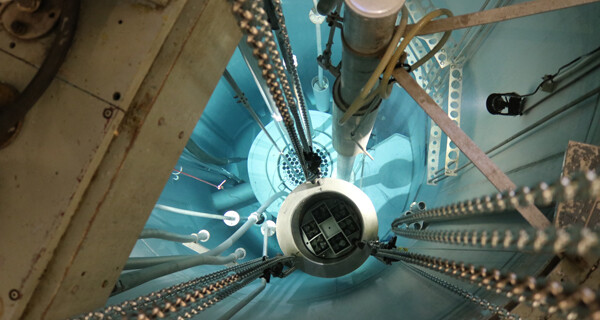
The demolition waste which is classified as radioactive is being delivered for final disposal at Fortum’s Loviisa nuclear power plant’s low- and intermediate-level waste repository. A total of approximately 60 cubic meters of this waste, mainly concrete, was generated for delivery to the Loviisa repository. A six-meter-high water tank and a two-meter-thick concrete shell surrounded the reactor.
“For us at Fortum, this successful project is a testament to our extensive expertise, covering the entire lifecycle of a nuclear facility. We have executed a nuclear facility decommissioning project with the same quality and competence with which we have operated nuclear facilities and delivered projects for external customers over decades,” says Antti Ketolainen, Fortum’s director in charge of the project.
A significant experience for both VTT and Fortum was the preparation of a decommissioning and dismantling plan required for the decommissioning license. Extensive documentation was produced and developed for this purpose.
“We gained a lot of lessons and experience from the FiR1 project, which we can use to develop our operations and support our service business customers, for example, in preparing decommissioning plans and cost estimates,” Ketolainen continues.
The decision to cease using the FiR1 reactor was made in 2012, and soon after, an environmental impact assessment for decommissioning commenced. The total decommissioning costs amounted to approximately 24 million euros, pre-funded by the Finnish Nuclear Waste Management Fund.
About 40 individuals worked on the decommissioning site at various stages and in shifts. Some VTT employees had worked with the reactor for decades. Three to four workers primarily carried out the actual dismantling, with others managing waste disposal, radiation monitoring, and site supervision.