Precious Anga
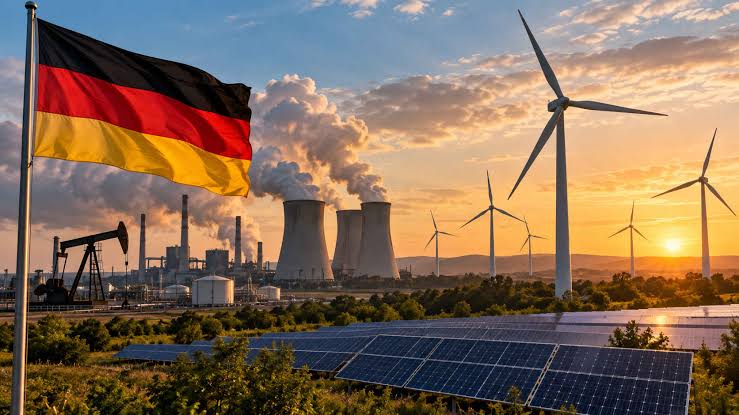
Lagos — Germany has unveiled a roadmap to end fossil fuel use across its energy sector by 2045, setting out measures to accelerate renewable power and electrification of transport, buildings and industry.
The roadmap, launched on the sidelines of the United Nations General Assembly in New York, makes Germany the third country after France and the Netherlands to publish a national plan for transitioning away from fossil fuels.
Under the plan, renewable energy is expected to provide at least 80 per cent of Germany’s electricity by 2030, up from about 55 per cent last year. The government also plans to expand wind power, install 2,000 additional wind turbines and increase battery use to reduce reliance on conventional power generation.
Germany is also targeting a further reduction in coal-fired generation. Although existing legislation requires all coal power plants to close by 2038, the new roadmap says the government is examining whether the phase-out can be brought forward to 2035.
The roadmap also sets out measures for gas-fired power generation, with new state-funded gas plants required to be hydrogen-ready and capable of switching to climate-neutral fuels by 2045.
In transport, Germany plans to support the shift away from petrol and diesel vehicles, including €2.8bn in subsidies for electric vehicle purchases by lower- and middle-income households. Government projections indicate that all new cars sold in the country could be electric by 2035, while freight, shipping and aviation are expected to rely on a combination of electrification, sustainable biofuels and hydrogen.
The transition also extends to buildings, where Germany plans to reduce the use of oil and gas heating systems through greater deployment of heat pumps. New gas and oil heating systems will face rising requirements to use climate-neutral fuels from 2029, reaching 60 per cent by 2040, under the roadmap.
For industry, the strategy centres on electrification, hydrogen, greater energy efficiency and carbon capture for emissions that are difficult to eliminate. Germany’s Environment Minister, Carsten Schneider, said the transition was also an economic strategy, arguing that money currently spent importing oil and gas would increasingly support domestic value creation. Germany spent about €76bn importing fossil fuels in 2024, with roughly two-thirds going towards oil and petroleum products.
The roadmap comes as UN Secretary-General António Guterres calls on governments to develop national plans for ending fossil fuel consumption and production, with clear timelines and protections for workers and communities affected by the transition. Germany’s government said the measures in its roadmap are intended to build momentum towards its wider climate-neutrality target for 2045.