– Undermining energy security, access, and emissions goals
– ‘Wasted gas amounts to Africa’s annual gas consumption’
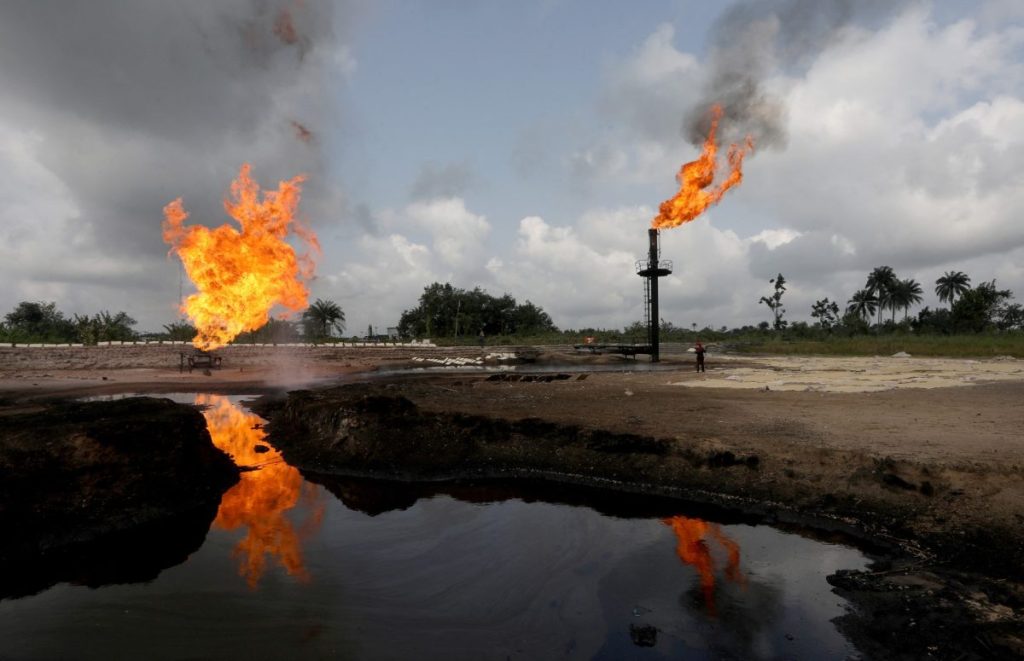
Washington — Global gas flaring surged for a second year in a row, wasting about $63 billion in lost energy and setting back efforts to manage emissions and boost energy security and access. Flaring, the practice of burning natural gas during oil extraction, reached 151 billion cubic meters (bcm) in 2024, up 3 bcm from the previous year and the highest level in almost two decades. An estimated 389 million tonnes of CO₂ equivalent—46 million of that from unburnt methane, one of the most potent greenhouse gases—was needlessly emitted.
While some countries have reduced flaring, the top nine largest-flaring countries continue to account for three-quarters of all flaring, but less than half of global oil production. Satellite data compiled and analyzed in the World Bank’s annual Global Gas Flaring Tracker shows that flaring intensity—the amount of gas flared per barrel of oil produced—has remained stubbornly high for the last 15 years.
“When more than a billion people still don’t have access to reliable energy and numerous countries are seeking more sources of energy to meet higher demand, it’s very frustrating to see this natural resource wasted,” said Demetrios Papathanasiou, World Bank Global Director for Energy and Extractives.
The report highlights that countries committed to the Zero Routine Flaring by 2030 (ZRF) initiative have performed significantly better than countries that have not made the commitment. Since 2012, countries that endorsed ZRF achieved an average 12% reduction in flaring intensity, whereas those that did not saw a 25% increase.
To accelerate progress, the World Bank’s Global Flaring and Methane Reduction (GFMR) Partnership is supporting methane and flaring reduction projects through catalytic grants, technical assistance, policy and regulatory reform advisory services, capacity building, and institutional strengthening. For example, in Uzbekistan, GFMR allocated $11 million to identify and fix methane leaks in the gas transportation network, cutting methane emissions by 9,000 tonnes annually, and potentially reaching up to 100,000 tonnes each year.
“Governments and operators must make flaring reduction a priority, or this practice will persist. The solutions exist. With effective policies we can create favorable conditions that incentivize flaring reduction projects and lead to sustainable, scalable action. We should turn this wasted gas into an engine for economic development.” said Zubin Bamji, World Bank Manager for the Global Flaring & Methane Reduction (GFMR) Partnership.
The World Bank’s GFMR is a multi-donor trust fund supported by governments, companies, and multilateral organizations committed to ending routine gas flaring and reducing methane emissions from the oil and gas sector. The annual Global Gas Flaring Tracker Report is a tool for monitoring and understanding the state of flaring worldwide and the progress made towards achieving Zero Routine Flaring by 2030. GFMR, together with the Payne Institute at the Colorado School of Mines, has developed global gas flaring estimates based upon observations from a satellite launched in 2012 and operated by the U.S. National Oceanic and Atmospheric Administration. The advanced sensors of this satellite detect the heat emitted by gas flares as infrared emissions.