 Mkpoikana Udoma
Port Harcourt — The Hydrocarbon Pollution Remediation Project, HYPREP, has declared that the ongoing Ogoni environmental restoration programme is producing measurable climate, ecological and socio-economic benefits, describing the cleanup as a “results-driven climate action” with growing community ownership.
In a statement to mark the 2026 World Environment Day, themed “Inspired by Nature. For Climate. For Our Future,” HYPREP Project Coordinator, Prof. Nenibarini Zabbey, said the agency remains committed to implementing the recommendations of the United Nations Environment Programme, UNEP, while advancing citizen-led sustainable climate action across the Niger Delta.
Zabbey said HYPREP’s ongoing shoreline cleanup, mangrove restoration, remediation of polluted soil and groundwater, potable water projects, livelihood support schemes, health interventions and the Ogoni Power Project were direct responses to the global call for environmental healing and sustainable development.
“As this year’s global campaign highlights the urgent signals our Earth is sending and calls for immediate, accelerated action to address climate change and environmental degradation, HYPREP reaffirms its commitment to best practices and to the full implementation of the Ogoni cleanup,” he stated.
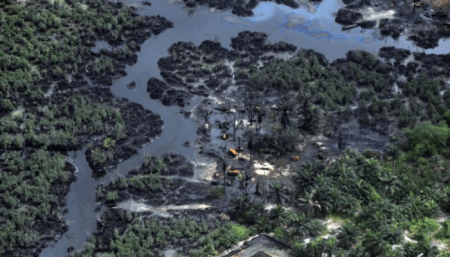
Highlighting one of the project’s flagship interventions, Zabbey said HYPREP was scaling up efforts to restore the world’s largest oil-degraded mangrove ecosystem through the planting of millions of native mangrove species and the systematic removal of invasive nipa palms.
“Our restoration teams are systematically mitigating invasive nipa palms to allow native mangrove species and other biodiversity to thrive,” he said.
According to him, the restoration programme is already yielding ecological benefits, including the return of aquatic life to previously degraded environments.
“Our mangrove restoration effort is restoring vital fish breeding and nursery grounds and expanding mangrove canopies, which has triggered the gradual return of fish, crabs, oysters, and periwinkles,” Zabbey stated.
He further noted that the restored mangrove forests were contributing to global climate mitigation efforts through carbon sequestration, adding that the carbon assets were being positioned to attract carbon credits that could provide long-term funding for local communities.
“The restored mangroves are sequestering large quantities of carbon, thereby helping mitigate global climate change. These carbon assets are being positioned to secure carbon credits, ensuring long-term funding for the communities to continue conserving the restored mangrove,” he explained.
Beyond environmental restoration, Zabbey said the project was creating jobs and economic opportunities for local residents, particularly women and youths.
“It is also worth noting that thousands of Ogoni youth and women are directly employed as mangrove planters, nursery operators, and environmental shoreline monitors, known as Mangrove Vanguards, who are helping to protect restored zones from re-pollution and to eliminate the threat of artisanal refining,” he said.
The HYPREP boss also disclosed that communities had embraced ownership of the cleanup process, with traditional rulers and local surveillance teams actively participating in the protection of restored shorelines and public infrastructure.
“The Project has secured collective community ownership, with local surveillance teams and traditional rulers actively co-managing the newly restored shorelines and facilities built in their respective communities to prevent vandalism,” he added.
Zabbey reiterated HYPREP’s commitment to accelerating remediation activities while sustaining investments in agriculture, vocational training and environmental education to strengthen community resilience and economic sustainability.
He also referenced the recent designation of the Ogoni wetlands as a Ramsar Site of international importance, describing it as recognition of the area’s ecological significance and ongoing restoration efforts.
“We believe environmental restoration is not just a regulatory obligation; it is a fundamental duty to our present and future generations, and we will ensure the Ogoni cleanup project achieves this,” he said.
Calling for broader collaboration, Zabbey urged stakeholders, community leaders, Niger Delta residents and the international community to support efforts aimed at restoring and protecting the region’s environment.
“HYPREP remains resolute in its mission and inspired, particularly by the sustained community support for bringing lasting environmental restoration to Ogoniland and its environs, ensuring that the Ogoni people live in a safe, healthy, and economically vibrant environment,” he stated.