Precious Anga
Lagos — Nigeria’s manufacturers spent a staggering ₦1.34 trillion on alternative energy sources in 2025 as persistent power shortages, rising fuel costs and broader economic reforms continued to drive up production expenses across the industrial sector.
The Manufacturers Association of Nigeria (MAN) disclosed that expenditure on self-generated power climbed sharply last year, reflecting the growing burden on businesses struggling to remain operational amid an increasingly challenging business environment.
In its latest assessment of economic reforms and their impact on industry, MAN acknowledged that key policy measures introduced by President Bola Tinubu’s administration were designed to stabilise the economy and lay the foundation for long-term growth. However, the association said manufacturers have borne a significant share of the adjustment costs, resulting in weakened competitiveness, declining capacity utilisation and job losses.
Director-General of MAN, Segun Ajayi-Kadir, said the combined effects of fuel subsidy removal, foreign exchange liberalisation, electricity tariff adjustments and tight monetary policy had fundamentally altered the operating landscape for manufacturers.
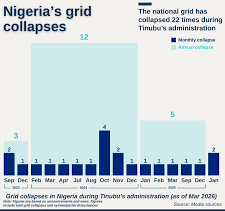
According to him, the removal of petrol subsidy in May 2023 triggered an immediate surge in transportation and distribution costs, with logistics expenses rising by more than 300 per cent in some cases. The situation was further compounded by higher electricity tariffs for Band A customers and continued instability in the national grid.
Despite electricity tariffs increasing from about ₦68 per kilowatt-hour to between ₦209 and ₦225 per kilowatt-hour, manufacturers continued to experience frequent power disruptions, forcing them to rely heavily on diesel, gas and petrol-powered generators.
As a result, spending on alternative energy rose from ₦781.68 billion in 2023 to ₦1.11 trillion in 2024 before reaching ₦1.34 trillion in 2025. MAN said the escalating energy costs have significantly undermined the competitiveness of local industries and reduced their ability to expand production.
The association noted that manufacturing capacity utilisation fell from 61.3 per cent in the first half of 2025 to 57.7 per cent in the second half of the year, reflecting the growing pressure on industrial operations. It added that more than 18,900 jobs were affected during the period as manufacturers grappled with shrinking margins and rising operating costs.
Foreign exchange reforms also presented major challenges. While exchange rate unification improved transparency in the market, the rapid depreciation of the naira significantly increased the cost of imported raw materials and industrial inputs.
MAN reported that the exchange rate moved from about ₦463 to the dollar in June 2023 to ₦899 by December of the same year, before weakening further to approximately ₦1,535/$ by the end of 2024. Consequently, expenditure on imported raw materials surged from ₦3.04 trillion in 2023 to ₦6.64 trillion in 2024, representing an increase of about 118 per cent.
The association further disclosed that manufacturing value added dropped sharply from $45.2 billion in 2023 to $21.84 billion in 2024, highlighting the impact of rising production costs and limited access to foreign exchange.
High borrowing costs also emerged as a major constraint on industrial growth. According to MAN, prime lending rates averaged 24.4 per cent as of March 2026, while some commercial banks charged as much as 33.8 per cent on loans.
The association stated that such borrowing conditions have made long-term industrial investment increasingly difficult and commercially unattractive, contributing to a decline in credit to the manufacturing sector from ₦10.88 trillion in February 2024 to ₦6.6 trillion by December 2025.
Despite the challenges, MAN commended several government initiatives aimed at supporting industrial growth, including the Naira-for-Crude programme, tax incentives for pharmaceutical manufacturers, the 2025 Tax Reform Act, the Nigeria Industrial Policy, the Nigeria First framework and the National Single Window platform.
Ajayi-Kadir said these policies could help accelerate industrial recovery if implemented effectively and consistently. He stressed that while economic reforms have laid the groundwork for long-term restructuring, attention must now shift towards rebuilding productive capacity and stimulating industrial growth.
According to him, achieving sustainable economic prosperity will require affordable access to foreign exchange, concessionary financing for manufacturers, reliable electricity supply and predictable trade policies.
“Nigeria cannot achieve sustainable economic prosperity without a strong manufacturing base,” he said. “The country’s long-term resilience depends on its capacity to produce competitively, create jobs locally and expand industrial value addition.”
The latest figures underscore the mounting cost of doing business in Africa’s largest economy and reinforce growing calls for targeted interventions to prevent further erosion of Nigeria’s manufacturing capacity.