Precious Anga
Lagos — As LPG prices soar, expanding methane distribution could provide millions of Nigerians with a cheaper and more sustainable cooking fuel option.
For years, Nigeria has been described as a gas-rich nation. Yet millions of households still struggle to access affordable cooking fuel, while businesses continue to grapple with rising energy costs.
The irony is difficult to ignore. A country blessed with more than 209 trillion cubic feet of proven natural gas reserves remains heavily dependent on Liquefied Petroleum Gas (LPG), a fuel that is becoming increasingly unaffordable for many Nigerians.
The pressure on consumers continues to mount. Recent market data from Petroleumprice.ng shows cooking gas prices climbing to around ₦2,000 per kilogramme in some parts of the country, pushing the cost of refilling a standard 12.5kg cylinder beyond the reach of many households. As prices continue to rise, an increasing number of families are being forced back to firewood, charcoal and other less efficient fuels, reversing years of progress toward cleaner cooking energy.
Against this backdrop, industry experts are beginning to ask an important question: if Nigeria possesses one of the largest natural gas reserves in Africa, why are millions of citizens still struggling to access affordable energy?
The answer may lie in methane.
Methane is the primary component of natural gas and the same resource Nigeria possesses in abundance. Unlike LPG, which consists mainly of propane and butane and requires specialised processing and distribution, methane can be supplied through pipelines, compressed cylinders, mini-LNG systems and emerging biogas technologies.
Perhaps more importantly, methane offers Nigeria an opportunity to build an energy market around a resource that is already available domestically.
The country’s challenge is not the absence of gas. Rather, it is the inability to convert that abundance into accessible and affordable energy for households and businesses.
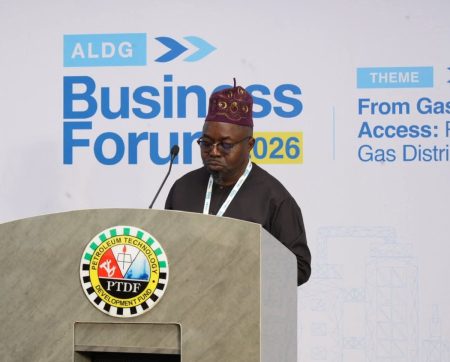
Minister of State for Petroleum Resources (Gas), Ekperikpe Ekpo, recently captured this reality during a gas industry forum in Abuja.
“Nigeria’s development will not be measured by the volume of gas beneath our soil, but by the extent to which that gas powers industries, supports households, creates jobs, and fuels sustainable economic growth.”
His remarks reflect a growing consensus among energy stakeholders that Nigeria’s gas problem is no longer about reserves but about access.
While billions of cubic feet of gas are produced annually, millions of Nigerians continue to depend on firewood, kerosene and increasingly expensive LPG for their daily cooking needs. Bridging that gap could unlock significant economic and social benefits.
Methane also presents another advantage that receives far less attention than it deserves. It can be produced from waste.
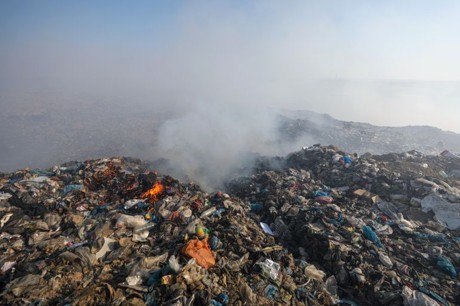
Animal manure, food waste, market refuse, agricultural residues and sewage can all be converted into biogas, a renewable fuel that consists largely of methane. Across Nigeria, thousands of tonnes of organic waste are generated daily, much of which ends up creating environmental and public health challenges.
With the right investment and technology, these waste streams could become a valuable source of domestic energy.
What makes this opportunity particularly compelling is that the technology already exists.
A United States-based company, Cenergy Solutions, has developed Adsorbed Biogas technology that allows methane-rich biogas to be stored safely in cylinders using activated carbon. The innovation enables methane to be distributed in a manner similar to LPG, allowing consumers to purchase and refill cylinders without owning the production infrastructure themselves.
The model draws inspiration from systems being explored in countries such as Thailand, where consumers simply exchange or refill cylinders at designated distribution centres while private operators own and manage the production facilities.
For Nigeria, this approach could be transformative.
One of the major limitations of conventional biogas projects has been the expectation that households must own digesters and produce their own gas. While that model works in some rural communities, it is difficult to scale commercially because of the high upfront costs.
The alternative is to separate production from consumption.
Commercial operators could establish methane production facilities close to large sources of organic waste such as cattle markets, abattoirs, food processing centres and major urban markets. The gas would then be processed, compressed into cylinders and distributed through retail outlets in the same way LPG currently reaches consumers.
In effect, Nigeria would not need to invent a completely new energy ecosystem. It could simply adapt a distribution model that consumers already understand.
The existing LPG market offers a clear blueprint.
Today, cooking gas reaches consumers through a network of storage terminals, bottling plants, transporters, marketers and retailers. Methane could follow a similar path. Producers would supply gas to processing facilities, marketers would distribute cylinders through retail channels, and consumers would refill their cylinders at approved outlets.
Such a system would allow methane to reach communities far beyond the current pipeline network while avoiding the enormous cost of building nationwide gas infrastructure in the short term.
The ownership structure could also mirror the successful elements of the LPG industry.
Private investors would finance gas processing plants, cylinder manufacturing facilities and distribution networks. Indigenous gas producers would supply feedstock from domestic gas fields while biogas developers could source organic waste from farms, markets and communities.
Government would play a supporting role through fiscal incentives, regulatory oversight and infrastructure development under existing initiatives such as the Decade of Gas programme.
Host communities could also participate through equity ownership in distribution assets, creating jobs and improving local acceptance of projects.
The economic benefits could be substantial.
Beyond reducing cooking fuel costs, a large-scale methane industry would create employment across the value chain, from waste collection and processing to transportation, retailing and equipment maintenance.
It would deepen domestic gas utilisation, reduce dependence on imported energy products and help Nigeria extract greater value from its natural resources.
It would also create a practical solution to the country’s growing waste management challenges by transforming organic waste into a commercially valuable commodity.
Environmental benefits would follow as well. Wider adoption of methane-based cooking fuels could reduce pressure on forests by lowering dependence on firewood and charcoal, while helping to cut harmful emissions associated with open waste disposal.
None of this suggests that the transition would be simple.
Significant investments would be required in gas gathering systems, compression facilities, storage infrastructure and transportation networks. Safety standards would need to be strengthened, and public awareness campaigns would be necessary to build consumer confidence.
Yet these are challenges that Nigeria has overcome before.
The LPG industry itself faced similar obstacles during its formative years before growing into the nationwide market that exists today.
What is different now is the urgency.
As LPG prices continue to rise, millions of Nigerians are searching for affordable alternatives. At the same time, Nigeria is seeking practical ways to utilise its vast gas reserves, reduce energy poverty and stimulate economic growth.
Methane offers a rare opportunity to address all three objectives simultaneously.
The real question is no longer whether Nigeria has enough gas.
The question is whether policymakers, investors and industry leaders are prepared to build the systems needed to deliver that gas to ordinary Nigerians.
For a nation that produces enormous quantities of organic waste while sitting on one of the world’s largest gas reserves, the opportunity is difficult to overlook.
The future of Nigeria’s gas sector will not be determined by the size of its reserves alone. It will be determined by how effectively those reserves improve the lives of the people who live above them.
And for millions of households struggling with the rising cost of cooking gas, methane may represent one of the most practical pathways from resource abundance to genuine energy access.