Oritsegbubemi Omatseyin
Lagos — The Nigerian Content Development and Monitoring Board (NCDMB) and the Federal Inland Revenue Service (FIRS) have created a platform aimed at providing tax incentives for oil and gas industry stakeholders investing in research and development.
Oil and gas companies desirous to reduce their tax burden and grow profitability should consider increasing investments in Research and Development (R&D), to take advantage of the incentives provided in existing fiscal laws.
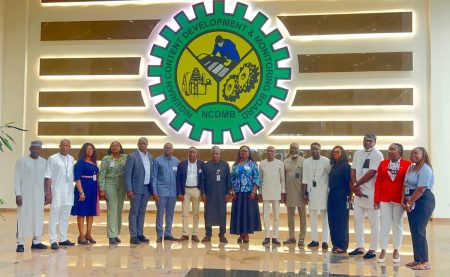
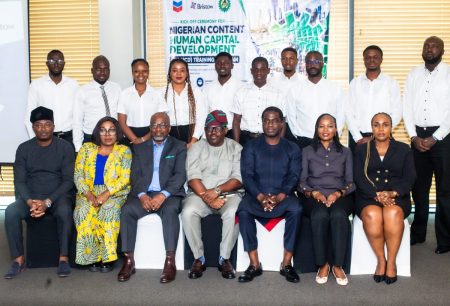
The Executive Secretary, NCDMB, Engr. Simbi Kesiye Wabote and the Executive Chairman, of Federal Inland Revenue Service (FIRS), Mr. Muhammad Nami stated this on Tuesday in Yenagoa, Bayelsa State, at the one-day Nigerian Oil and Gas Industry Suppliers’ Tax Awareness Workshop jointly organized by the two organizations at the NCDMB Conference Hall.
Delivering the keynote address at the event, the Executive Secretary NCDMB Engr. Simbi Kesiye Wabote stated that the Finance Act 2021 and other extant tax codes relating to Research and Development provide attractive tax incentives for oil and gas firms that invest in R&D.
He hinted that many oil and gas companies were oblivious to the opportunities that exist within Nigerian tax laws for the oil industry to harness from investing in Research and Development. He reiterated that such workshops provide the necessary education and enlightenment that enable businesses to position themselves appropriately to benefit from making R&D an integral part of their business model.
He observed that the low level of R&D funding by private companies is partly linked to inadequate information. He regretted that “the consequence is not only significant capital flight in the acquisition of technology required for oil and gas projects and operations, but also players in the sector are tied to the apron and direct control of the foreign supply chain who control the technological advances arising from their R&D activities.”
Wabote cited examples of leading Fortune 500 companies that commit between 5- 10% of their annual budgets to R&D, which enables them to produce innovative products and make significant tax returns to the Government and create huge employment opportunities.
Speaking further, the NCDMB boss expressed hope that the workshop will change the gross underfunding of research in Nigeria, which is currently estimated at less than 0.2% of the national budget. He insisted that operators can no longer neglect R&D, insisting that it is key to local content development, enhancement of future tax revenue to the Government, development of home-grown solutions, and retention of industry spending within Nigerian financial institutions.
He remarked that “that access to the Nigerian Content Intervention Fund by the local supply chain has been one of the major contributors to the growth in local content level from less than 5% in 2010 to 54% in 2022.”
He hinted that the Board is “pushing for similar performance in Research and Development by sharpening our focus on the various elements that will enable the growth and appreciable impact of research and development in our economy.”
The Executive Secretary identified funding as one of the key pillars of R&D, and that informed the launch of the $50 million Nigerian Content Research & Development Fund to drive strategic programs and developments in the R&D ecosystem.
He however insisted that Government should not be the sole financier of R&D, pointing out that “the bulk of R&D funding should come from the private sector who are business owners and will ultimately benefit directly from the research outcomes.”
The Executive Secretary affirmed that the conference was organized in line with Section 70 of the Nigerian Oil & Gas Industry Content Development Act 2010 which mandates NCDMB to organize conferences and other public education fora to develop local content in the Nigerian oil and gas industry.
He added that the Board is leveraging the Enabling Business Environment pillar of its 10-year Strategic Roadmap, to collaborate with the FIRS in creating a platform for engaging oil and gas industry stakeholders, to highlight the inherent benefits of investing in R&D, for the private sector and government entities.
In his remarks, the Executive Chairman, of Federal Inland Revenue Service, Mr. Muhammad Nami who was represented by his Senior Special Assistant, Mr. Gabriel Ogunjemilusi reiterated that “Research and Development (R&D) has been identified as a veritable means for companies that want to remain competitive and profitable in today’s rapidly changing business environment.”
He provided details on Federal Government’s tax regime, incentives, and related facts. He stated “Allowable deduction of up to 10% of the amount of reserve made out of the profits of a period by a company for research and development; claim of capital allowance on capital expenditure on plant and machinery used for R&D activities; pioneer status tax holiday for R&D Companies; companies and other organizations that invest in R&D facilities for commercialization can claim a tax credit of up to 20% of the cost of their qualifying expenditures.”
He assured participants that the Federal Inland Revenue Service (FIRS) will continue to support all companies in Nigeria to take advantage of available fiscal incentives provided by the Nigerian tax laws.
The Workshop attracted renowned finance and legal experts who spoke on “Provisions of the NOGIC Act on R&D, R&D Operating Model and Imperatives on Success,” “Royalty Potentials from R&D Investments,” and “Constraints of Investing and Way Forward.”