Close Menu
    Facebook X (Twitter) Instagram
    Facebook X (Twitter) Instagram
    SweetCrudeReportsSweetCrudeReports
    Subscribe
    • Home
    • Oil
    • Gas
    • Power
    • Solid Minerals
    • Labour
    • Financing
    • Freight
    • Environment
    • Community Development
    • Renewable Energy
    • E-Editions
    SweetCrudeReportsSweetCrudeReports
    Home » Nigeria electricity workers suspend strike that caused blackout

    Nigeria electricity workers suspend strike that caused blackout

    August 18, 2022
    Share
    Facebook Twitter LinkedIn WhatsApp

    Abuja — Workers at the Transmission Company of Nigeria (TCN) have suspended a strike that began on Wednesday and caused a nationwide blackout, a workers union official said after a meeting with the government.
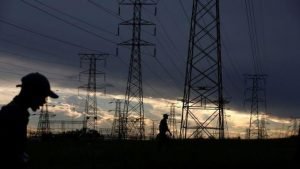
    *Men commuting underneath power transmission lines.

    The grid capacity dropped to zero by 5:00 p.m. (1600 GMT) from 4,100 megawatts (MW) early on Wednesday, according to TCN. By 9:50 p.m. (20:50 GMT) capacity was at just 35 MW.

    The National Union of Electricity Employees (NUEE) general secretary Joe Ajaero told Reuters the union would suspend the strike for two weeks after a meeting with TCN management and the minister of power.

    “A committee chaired by the Minister of State for Power has been set up to work out modalities on resolution of the issues. Power would be restored either this night or tomorrow in the morning,” Ajaero said.

    NUEE had said in a notice to members that it was protesting against discriminatory promotion procedures at the state-owned transmission company and unfair labour practices in the power sector, among other grievances.

    Nigeria’s 11 electricity distribution companies issued notices to clients on Wednesday saying that they were unable to supply power due to the strike.

    Lagos-based Ikeja Electric, the largest distribution company, said “we are currently experiencing disruption of power supply as most stations within our network have been shut down.”

    On Tuesday, Nigeria’s national grid had a peak supply of 4,800 MW, the highest in many months but still far below what the country of 200 million people needs.

    A majority of businesses and homes rely on diesel and petrol-powered generators while many more go without electricity.

    *Camillus Eboh; Editing: MacDonald Dzirutwe, David Evans, Hugh Lawson & Aurora Ellis – Reuters

    Follow us on twitter

    Related News

    Nigeria, World Bank strengthen partnership to build capacity of institutional workforce

    PTDF, Air Force Institute deepen partnership on energy skills

    TotalEnergies launches 2026 employee share offering

    Comments are closed.

    E-book
    Resilience Exhibition

    Latest News

    Nigeria advances electric mobility standards as stakeholders unite behind national framework

    June 17, 2026

    Nigeria’s ex-oil minister Alison-Madueke cleared of all charges in UK corruption trial

    June 17, 2026

    Navy uncovers hidden 17,000-litre crude oil theft hub in Delta

    June 17, 2026

    Heirs Energies launches green corridor project to boost climate resilience in Rivers

    June 17, 2026

    Cooking gas prices could drop below ₦1,100/kg if reforms succeed

    June 17, 2026
    Demo
    Facebook X (Twitter) Instagram
    • Opec Daily Basket
    • Oil
    • Power
    • Gas
    • Freight
    • Financing
    • Labour
    • Technology
    • Solid Mineral
    • Conferences/Seminars
    • Community Development
    • Nigerian Content Initiative
    • Niger-Delta Question
    • Insurance
    • Other News
    • Focus
    • Feedback
    • Hanging Out With Markson

    Subscribe for Updates

    Get the latest energy news from Sweetcrudereports.

    Please wait...
    Please enter all required fields Click to hide
    Correct invalid entries Click to hide
    © 2026 Sweetcrudereports.
    • About Us
    • Advertise with us
    • Privacy Policy

    Type above and press Enter to search. Press Esc to cancel.