Mkpoikana Udoma
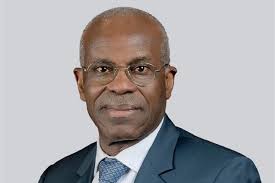
Port Harcourt — Nigeria must urgently strengthen its resource resilience by diversifying across oil, gas, and solid minerals to withstand global energy market volatility, Chairman of Renaissance Africa Energy Company Limited, Dr. Layi Fatona, has said.
Speaking at the 61st Annual International Conference of the Nigerian Mining and Geosciences Society, NMGS, in Uyo, Fatona warned that the country faces commodity cycles, shifting energy geopolitics, and rising security risks, requiring a more integrated and forward-looking strategy.
His remarks were delivered by Renaissance Vice-President for Exploration, Johnbosco Uche.
“Infrastructure must be designed to withstand economic, environmental and security shocks,” he said, aligning with the conference theme on efficiency, sustainability, and resilience in resource management.
Fatona stressed that efficiency across the entire value chain, from exploration to production and market access, is critical to unlocking value.
“Data-driven decision-making is central to unlocking efficiency gains,” he noted, calling for reduced cycle times, elimination of redundancies, and improved recovery rates.
He further underscored the central role of infrastructure in monetising Nigeria’s vast resource base.
“Resource wealth without infrastructure is stranded potential,” Fatona said, urging investments in transport networks, gas infrastructure, processing facilities, and export corridors.
He added that integrated planning across oil, gas, and mining sectors would unlock scale, reduce costs, and deepen domestic value capture.
On sustainability, he argued for a shift from compliance to strategy.
“We must ensure that today’s extraction does not compromise tomorrow’s prosperity,” he said, highlighting the importance of environmental stewardship, host community inclusion, and responsible resource utilisation.
Fatona also pointed to the growing role of technology and innovation, including artificial intelligence, automation, and digital subsurface modelling, in enhancing operational efficiency and safety.
“Real-time monitoring of infrastructure enhances reliability and reduces losses,” he added, warning that Nigeria must accelerate technological adoption to remain globally competitive.
He commended the administration of President Bola Ahmed Tinubu for recent executive orders aimed at improving the operating environment in the sector.
“These actions continue to empower Nigerian operators and improve the ease of doing business,” he said, describing industrialization as “a necessary vision” for a resource-rich nation with a growing population.
Fatona called for stronger collaboration between government, industry, and stakeholders to drive sustainable development, noting that Nigeria’s long-term economic stability depends on how effectively it manages and monetises its resource base.