Mkpoikana Udoma
Port Harcourt — Nigeria has emerged as the third-largest borrower from the World Bank, with obligations estimated at about $18.7 billion, according to recent reports, a development that has reignited debate over the country’s debt strategy and economic direction.
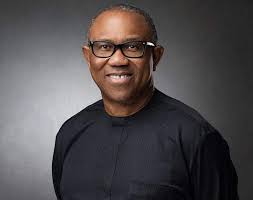
Bangladesh ranks first among borrowers with about $23 billion, figures that former presidential candidate Peter Obi says highlight a deeper issue: not borrowing itself, but how borrowed funds are deployed.
“I continue to emphasise that there’s nothing inherently wrong with borrowing. Nations borrow to improve productivity and stimulate growth,” Obi said in a statement. “Debt becomes a problem only when it finances consumption, inefficiency, or corruption rather than investment as is our own case.”
Drawing comparisons between Nigeria and Bangladesh over the past decade, Obi argued that outcomes, not loan volumes, reveal whether debt is productive.
Around 2015, Bangladesh’s nominal GDP stood at roughly $195 billion, with per-capita income slightly above $1,235. By 2024-2025, its economy had expanded to an estimated $460-500 billion, while per-capita income rose to about $2,700.
“In a decade, Bangladesh more than doubled the size of its economy, lifted incomes, and strengthened its export base,” Obi said. “That is evidence that borrowed resources were largely channelled into productive sectors such as manufacturing, textiles, energy, and human capital.”
Nigeria’s economic trajectory, he noted, has moved in the opposite direction.
In 2015, Nigeria’s GDP was about $490 billion, with per-capita income between $2,600 and $2,700. Today, GDP is estimated at below $250 billion, with per-capita income ranging between $850 and $1,000.
“Instead of expanding as is the case with Bangladesh, the economy has effectively contracted,” Obi stated.
‘The Real Issue Is Use of Borrowed Funds’
Obi stressed that the contrast between both countries underscores a fundamental policy lesson.
“One country borrowed and expanded production, exports, and incomes. The other borrowed but saw declining economic strength and living standards,” he said.
“This suggests that the real issue is not the size of borrowing, but the use of borrowed funds. Debt tied to infrastructure, industry, and human development fuels growth. Debt tied to consumption, leakages, and corruption deepens stagnation.”
He added that a different outcome remains achievable if fiscal discipline and productive investment become central to borrowing decisions.
“A new Nigeria where loans, if taken, will translate into productivity instead of consumption is very much possible,” Obi said.
The remarks come amid heightened backlash against Nigeria’s rising external debt profile and growing concerns over economic contraction, currency volatility and declining real incomes.