Close Menu
    Facebook X (Twitter) Instagram
    Facebook X (Twitter) Instagram
    SweetCrudeReportsSweetCrudeReports
    Subscribe
    • Home
    • Oil
    • Gas
    • Power
    • Solid Minerals
    • Labour
    • Financing
    • Freight
    • Environment
    • Community Development
    • Renewable Energy
    • E-Editions
    SweetCrudeReportsSweetCrudeReports
    Home » Nigeria tightens cash withdrawal limits to curb money-laundering risk

    Nigeria tightens cash withdrawal limits to curb money-laundering risk

    December 3, 2025
    Share
    Facebook Twitter LinkedIn WhatsApp
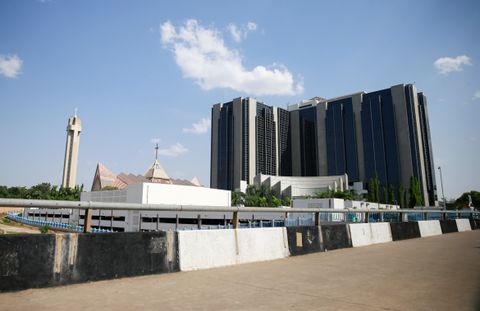
    *A view of Central Bank of Nigeria headquarters next to National. Ecumenical Centre in Abuja, Nigeria November 23, 2021. REUTERS/Afolabi Sotunde

    Abuja — Nigeria’s central bank announced sweeping changes to its cash management policies on Tuesday, introducing stricter withdrawal limits and scrapping fees on excess deposits in a bid to curb cash dependency and tackle security and money-laundering risks.

    Effective January 1, 2026, individuals will be limited to cumulative weekly withdrawals of 500,000 naira and corporates 5 million naira, the Central Bank of Nigeria said in a circular to banks and financial institutions.

    Withdrawals above these thresholds will attract fees of 3% for individuals and 5% for corporates.
    The move marks the latest step in Nigeria’s long-running push toward a cashless economy, following years of policy adjustments and enforcement challenges.

    “The measures aim to moderate the rising cost of cash management, address security concerns and reduce the potential for money laundering,” the CBN said.

    In October, Nigeria and South Africa, sub-Saharan Africa’s two largest economies, were removed from the Paris-based Financial Action Task Force (FATF) list of countries subject to increased monitoring for illicit money flows.

    Special authorisations for large monthly withdrawals of 5 million naira for individuals and 10 million naira for corporates have been scrapped, and exemptions for embassies and donor agencies removed. However, government revenue accounts and certain financial institutions will remain exempt.

    Banks must report transactions above the limits and maintain separate ledgers for charges collected the circular added.
    ($1 = 1,441.5700 naira)

    *Camillus Eboh; Chijioke Ohuocha; editing: Mark Heinrich – Reuters

    Related News

    US praises Nigeria’s CNG push, urges wider adoption

    Again, Obi questions Nigeria’s rising debt, demands borrowing transparency

    IEA sees significant 2027 oil surplus after Hormuz recovery

    Comments are closed.

    E-book
    Resilience Exhibition

    Latest News

    The risk problem with investors treating African energy as one market

    June 20, 2026

    NNPC pushes regional energy integration, technology for Africa’s growth

    June 20, 2026

    China sets new solar efficiency record with Perovskite breakthrough

    June 20, 2026

    Nigeria must act faster on environmental challenges

    June 20, 2026

    UNDP urges Nigeria to pursue future beyond plastic dependence

    June 20, 2026
    Demo
    Facebook X (Twitter) Instagram
    • Opec Daily Basket
    • Oil
    • Power
    • Gas
    • Freight
    • Financing
    • Labour
    • Technology
    • Solid Mineral
    • Conferences/Seminars
    • Community Development
    • Nigerian Content Initiative
    • Niger-Delta Question
    • Insurance
    • Other News
    • Focus
    • Feedback
    • Hanging Out With Markson

    Subscribe for Updates

    Get the latest energy news from Sweetcrudereports.

    Please wait...
    Please enter all required fields Click to hide
    Correct invalid entries Click to hide
    © 2026 Sweetcrudereports.
    • About Us
    • Advertise with us
    • Privacy Policy

    Type above and press Enter to search. Press Esc to cancel.