Mkpoikana Udoma
Port Harcourt — The Petroleum Products Retail Outlets Owners Association of Nigeria, PETROAN, has called for a stronger pricing stability and regulatory collaboration in Nigeria’s evolving downstream petroleum market.
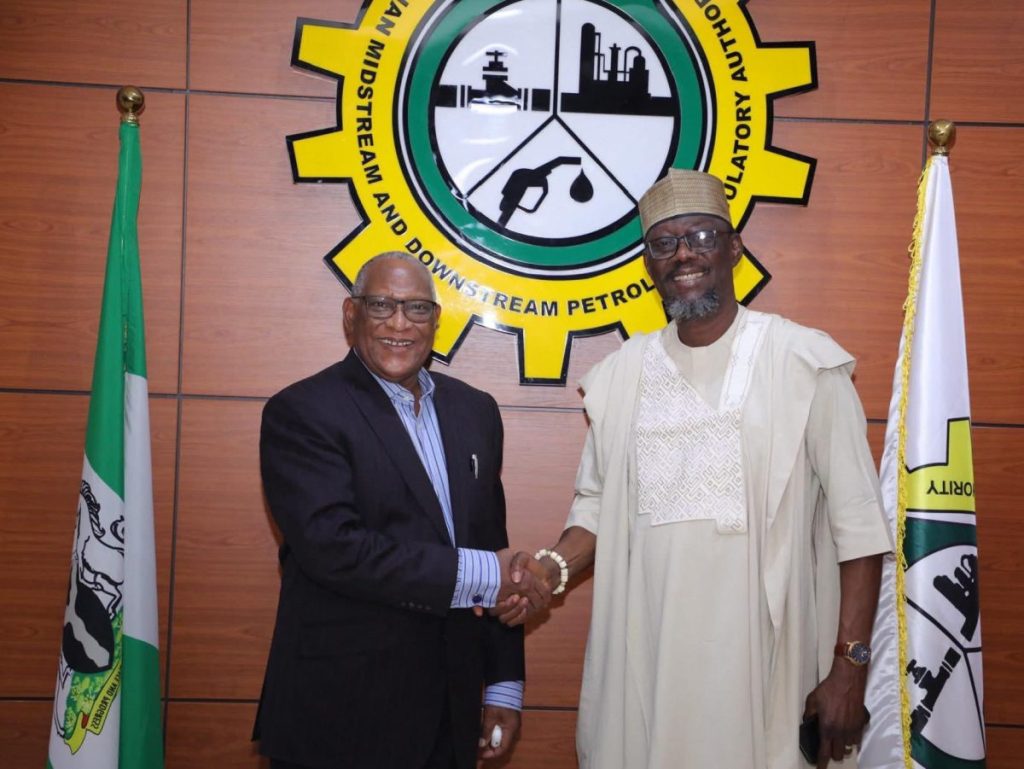
PETROAN President, Dr. Billy Gillis-Harry, made the the call when he led members of the association on a courtesy visit to the Nigerian Midstream and Downstream Petroleum Regulatory Authority, NMDPRA, in Abuja.
PETROAN engaged the leadership of the sector regulator in discussions centered on operational efficiency, product availability, compliance standards, and consumer protection at the retail end of the value chain.
Speaking during the meeting, Dr. Gillis-Harry underscored the need for sustained engagement between regulators and retail operators to address ongoing market realities.
“Improved synergy between the regulator and operators will enhance transparency, safety standards, and overall service delivery at the retail end of the value chain,” he said.
He commended the Authority’s reform-driven initiatives, noting that consistent dialogue would help mitigate operational bottlenecks confronting outlet owners nationwide.
The meeting comes at a critical time as retail operators continue to adjust to a more liberalised and competitive pricing environment.
In his remarks, the Authority Chief Executive, Engr. Saidu Mohammed, reaffirmed the regulator’s commitment to fairness and sustainability across the downstream sector.
“We are committed to creating a level playing field and fostering a business environment that supports sustainable growth, investment, and efficiency in petroleum retail operations nationwide,” the NMDPRA boss stated.
He added that collaboration with key stakeholders such as PETROAN remains central to strengthening regulatory compliance and maintaining consumer confidence in the sector.
The meeting concluded with both parties expressing a shared determination to deepen cooperation in advancing a more resilient, transparent, and performance-driven downstream petroleum industry.
The engagement signals renewed efforts to align regulatory oversight with operational realities, as Nigeria continues to recalibrate its downstream framework toward improved efficiency and market stability.