Mkpoikana Udoma’
Port Harcourt — The House of Representatives Committee on Host Communities has signalled plans to push legislative amendments to the Petroleum Industry Act, PIA, to address implementation gaps affecting the Host Community Development Trusts, HCDTs, established to drive development in Nigeria’s oil-producing areas.
Chairman of the committee, Dumnamene Deekor, disclosed this in Port Harcourt during the Host Communities Development Forum 2026 and public presentation of the Gender-Aware Host Community Development Trust Index organised by Policy Alert.
Deekor said the National Assembly has already identified several provisions in the Petroleum Industry Act that require legislative adjustments to ensure the law delivers its intended benefits to host communities.
“The PIA was a relief to host communities, but human laws are not without shortcomings,” Deekor said.
“As a committee and in concert with civil society organisations like yours, we have been able to identify some apparent provisions that require legislative retooling for effective implementation of the PIA.”
One of the key issues highlighted by the lawmaker is the delay in the establishment of several Host Community Development Trusts beyond the statutory timeline set by the Act.
“The HCDTs are supposed to be established within 12 months of the PIA being passed, but we are already well beyond this timeframe,” he said.
“It is not clear what the new timeframe is, and such timelines should be communicated alongside penalties for further delays.”
Deekor also raised concerns over the process used by oil companies to determine host community beneficiaries, particularly in coastal and littoral areas where boundary disputes remain unresolved.
“You don’t leave the determination of the host community solely to the settlors,” he said, calling for the Nigerian Upstream Petroleum Regulatory Commission to establish a standard framework for allocating company funds to affected communities.
The lawmaker further stressed the need for stronger sanctions against oil companies that fail to meet their statutory funding obligations to host community trusts.
“It would be helpful to explicitly state the penalties that oil and gas companies will face for failing to deliver contributions on time,” Deekor said.
“Administrative penalties are not to the advantage of host communities that are victims of delayed or non-compliance.”
He also called for greater transparency in the calculation of oil companies’ operational expenditure, OPEX, which determines the amount contributed annually to host community funds.
“This transparency will enable communities, civil society organisations and the National Assembly to verify that Host Community Development Trusts are receiving their rightful allocations,” he added.
Earlier, Executive Director of Policy Alert, Tijah Bolton-Akpan, said the new index assessed 18 trusts across Rivers and Akwa Ibom states to determine whether the host community framework is delivering on its development mandate.
“This index measures whether the promise of the Petroleum Industry Act is being kept,” Bolton-Akpan said.
He noted that while some trusts have demonstrated strong governance structures and transparency, many still struggle with accountability gaps.
“Too many trusts still operate with opacity, treating transparency as optional and accountability as something to be managed rather than embraced,” he said.
Bolton-Akpan also warned that host communities remain largely unprepared for the global energy transition despite their heavy dependence on the oil and gas sector.
“Not a single trust in this index has developed a comprehensive strategy for preparing communities for the global shift away from fossil fuels,” he said.
A representative of the Nigerian Upstream Petroleum Regulatory Commission, NUPRC, Mr Success Ikpe, explained that while the PIA does not mandate gender quotas in the governance structures of Host Community Development Trusts, regulatory guidelines encourage diversity.
“Due consideration shall be given to diversity as it relates to age, gender and physical disability in determining the criteria for appointment into the governance structures of the Trust,” he said.
Also contributing, Stephen Akpan of the Nigeria Extractive Industries Transparency Initiative, NEITI, stressed that the region must use the PIA framework to correct decades of environmental and economic neglect.
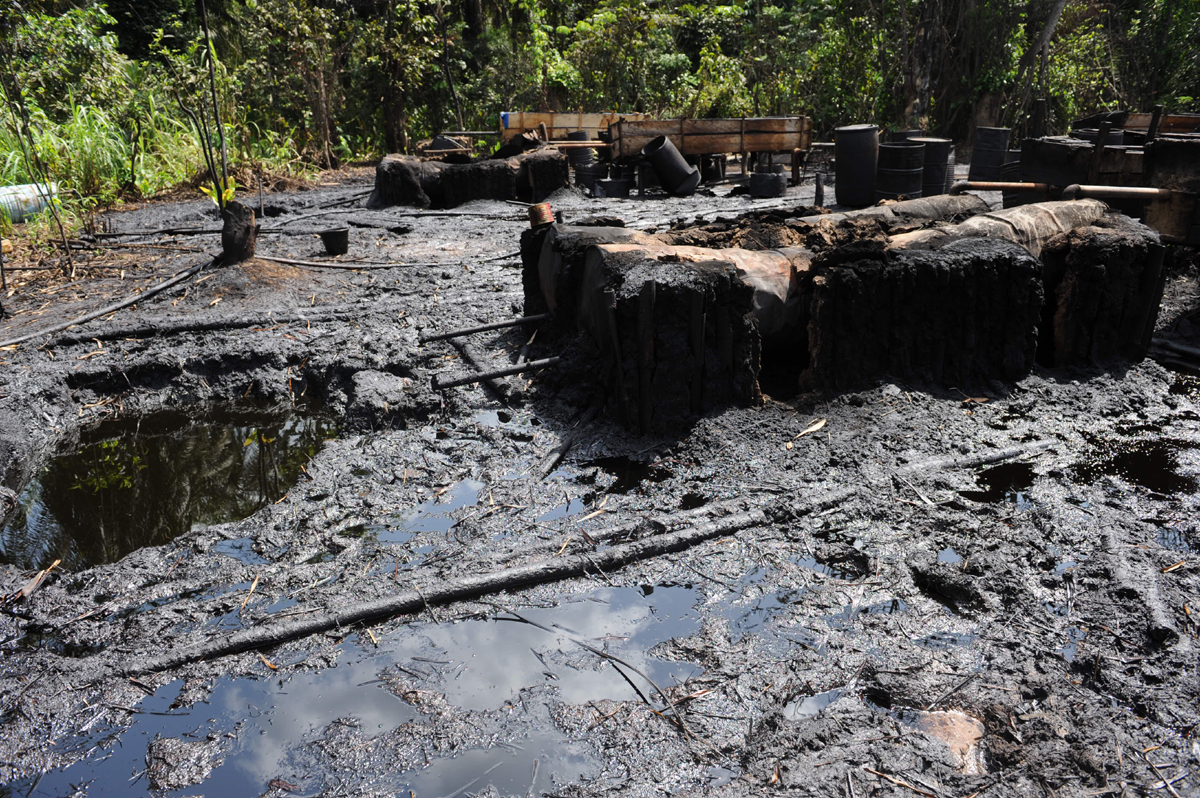
“We have lost so much in 70 years. The environment has been destroyed, and communities are experiencing the consequences,” Akpan said.
Stakeholders at the forum agreed that without stronger enforcement, transparency and community participation, the host community trust framework risks falling short of its promise to deliver sustainable development in Nigeria’s oil-producing regions.