Mkpoikana Udoma
Port Harcourt — In a major boost to environmental governance in the Niger Delta, the Institute of Pollution Studies, IPS, at the Rivers State University, RSU, has unveiled a comprehensive map of petrol filling stations in Port Harcourt Municipality and launched an ambitious groundwater protection campaign.
The twin initiatives, are being positioned as a strategic intervention in a region long grappling with hydrocarbon pollution, weak urban planning controls, and mounting groundwater risks.
The newly developed geospatial map provides detailed data on the location and distribution of petrol stations across Port Harcourt Municipality, a tool experts say will strengthen environmental monitoring, regulatory oversight, and risk assessment in one of Nigeria’s most oil-sensitive urban corridors.
Describing the project as a “major milestone,” Director of the Institute, Prof. C. L. Eze, said the mapping exercise represents a critical step toward evidence-driven environmental governance.
“This initiative marks a significant breakthrough in safeguarding groundwater resources in Rivers State and the wider Niger Delta region,” Prof. Eze said.
“The data generated from this mapping exercise will enhance environmental monitoring, improve urban planning decisions, and strengthen regulatory oversight.”
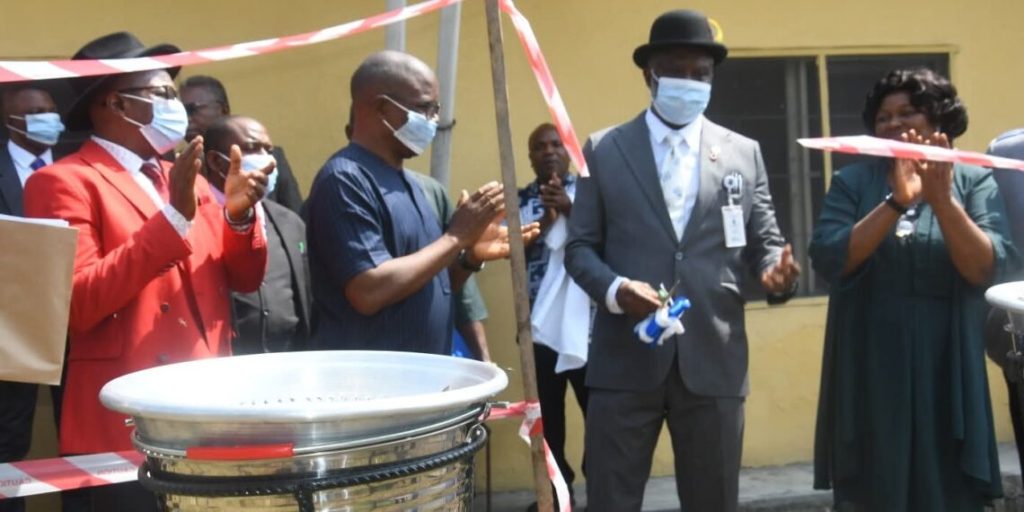
Beyond mapping fuel infrastructure, the Institute also flagged off a scientific “Bucket Experiment” aimed at assessing the impact of buried municipal waste on groundwater quality.
The controlled research model is expected to generate empirical data on leachate movement and contamination risks, a key concern in cities where open dumping and poorly engineered landfills remain prevalent.
“The findings from this groundwater study will support improved waste management systems and promote the adoption of engineered landfill solutions across the region,” Prof. Eze added.
“Our goal is to provide science-based evidence that can shape policy, drive advocacy, and promote sustainable development.”
Unveiling the project, Vice-Chancellor of RSU, Prof. Isaac Zeb-Obipi, commended the Institute for what he described as a forward-thinking and globally aligned intervention.
“These initiatives are fully aligned with the United Nations Sustainable Development Goals,” the Vice-Chancellor said.
“As a university, we are committed to supporting research that delivers measurable social, environmental, and economic impact.”
In a move that underscores the international relevance of the project, Prof. Zeb-Obipi announced that the Director of the Institute would represent RSU at an upcoming global environmental meeting in Kigali.
“This presents an opportunity to showcase our pioneering work on a global platform and demonstrate that Rivers State University is contributing meaningfully to global environmental solutions,” he stated.
The initiatives could significantly influence regulatory reforms and investment in sustainable waste management infrastructure across Rivers State and the broader Niger Delta, a region where groundwater serves as a critical source of domestic water supply.
With the unveiling of the petrol station map and the launch of the groundwater experiment, RSU is consolidating its position as an emerging hub for environmental research excellence, while pushing the policy conversation toward stronger ecological resilience and public health safeguards.