Esther Oritse
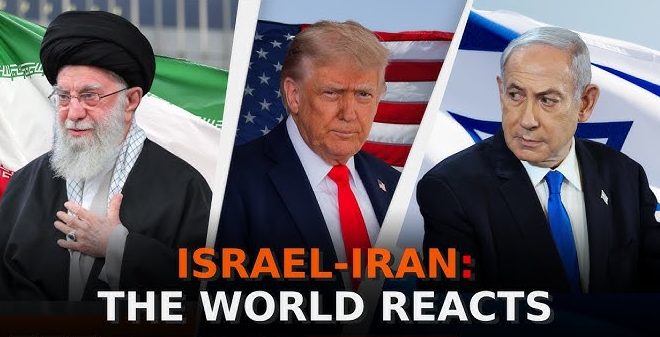
Lagos — Heightened military tensions involving Iran, the United States and Israel have significantly increased threats to international shipping, raising concerns across global maritime and trade sectors.
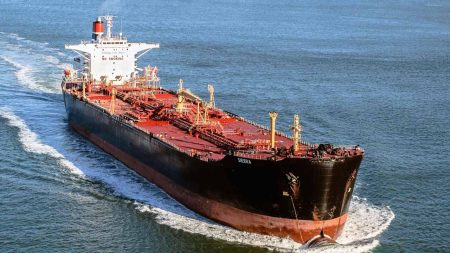
The escalation, marked by reciprocal military actions and heightened naval deployments, has intensified security risks along key sea lanes, particularly around the Strait of Hormuz, a vital corridor for global oil and commercial cargo movement.
Maritime security agencies have issued fresh advisories to shipping operators, warning of possible missile, drone and naval incidents that could disrupt vessel movements. Several shipping lines are reportedly reviewing routes, while insurers are reassessing risk exposure in the region.
Industry analysts warn that any prolonged disruption could impact global energy supplies, freight rates and insurance premiums, with ripple effects across international trade. Stakeholders continue to monitor developments closely as diplomatic efforts struggle to contain further escalation.
Prior to the US strikes, Israel announced that it had carried out “preventative” attacks on Iran. Iran has in turn targeted Israel with a series of missile strikes.
Reports state Iran has also targeted Riyadh, Saudi Arabia, and attacked US air bases in Qatar, Kuwait, the UAE, and Bahrain.
This massive escalation poses a threat to vessels in the Arabian Gulf, the Gulf of Oman, the Northern Arabian Sea, and the Strait of Hormuz. The problem of electronic interference is likely to worsen, causing disruptions to the Automated Identification System, AIS, and other navigational and communications systems. It is currently unclear whether vessels in the region will be targeted directly, but collateral damage during attacks targeting port infrastructure is a realistic possibility.
Reacting to the development, a retired ship Captain, Ade Olopoenia, a maritime analyst and consultant said that if tensions are desecalated, it will impact on Iran and Iraq oil exports and consequently lead to high cost of shipping.
Olopoenia also said that both Iraq and Iran export so much crude and refined products to the world adding that the current development could also lead to high cost of both crude oil and refined products.
He warned a lot shop would avoid any war zone for fear of being caught in the cross fire explaining that if any vessel must go to the Persian Gulf, it will be at a very high cost.
He warned that all the Middle East countries could also be affected as Iran has threatened to attack countries in this region.
He appealed to the leadership of the countries involved in this escalation of violence in Iran to consider this period of fast and desecalated tension in the region.