Precious Anga
Lagos — Despite solar energy becoming the cheapest source of electricity ever developed, several U.S. states are scaling back climate commitments amid rising energy costs, political opposition and shifting federal policies.
The trend highlights a growing contradiction in the American energy transition: while renewable energy technologies continue to become more affordable and commercially attractive, political support for aggressive decarbonisation targets is weakening in some parts of the country.
New York recently became the first U.S. state to formally delay a legally binding climate target, extending its goal of cutting greenhouse gas emissions by 40 per cent from 2030 to 2040. State officials cited concerns over energy affordability and implementation challenges, although critics argue the move reflects growing political pressure and difficulties in meeting existing commitments.
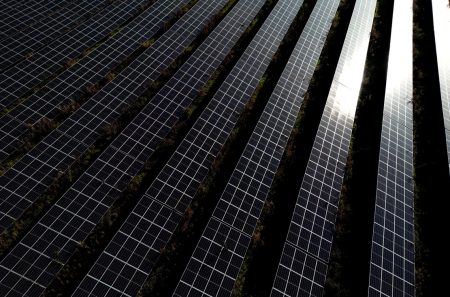
The rollback comes as renewable energy, particularly solar power, continues to gain economic advantages over conventional energy sources. Industry data shows solar generation costs have fallen dramatically over the past decade, making it the most cost-effective source of electricity in many regions.
Analysts note that expanding renewable energy capacity has become increasingly important as electricity demand surges, driven largely by the rapid growth of artificial intelligence, data centres and digital infrastructure.
However, policy uncertainty and regulatory challenges are slowing progress in several states. The administration of U.S. President Donald Trump has taken a more aggressive stance against certain clean energy policies, including legal challenges targeting electric vehicle mandates and other climate-related regulations.
As a result, some state governments that previously adopted ambitious clean energy targets are now revising or softening those commitments.
Energy experts argue that reducing support for renewable energy could ultimately worsen affordability concerns, as extreme weather events, fossil fuel price volatility and growing energy demand continue to place pressure on consumers.
Interestingly, while some traditionally climate-focused states are reconsidering their targets, renewable energy investment is accelerating in several conservative-leaning states. Industry observers attribute this trend to lower land costs, simpler permitting processes and favourable conditions for large-scale solar and wind developments.
Many of these states have emerged as key destinations for utility-scale renewable energy projects despite broader political resistance to climate policies.
The shift suggests that market fundamentals rather than political ideology are increasingly driving renewable energy deployment. Falling technology costs, strong investor interest and rising electricity demand continue to support growth in the sector, even as policy debates intensify.
Energy analysts believe the next phase of the U.S. energy transition will depend less on ambitious climate pledges and more on the ability of governments to remove regulatory barriers, modernise electricity infrastructure and create conditions that allow renewable energy projects to be developed at scale.
While political support for climate action may fluctuate, the economic case for solar and other renewable technologies continues to strengthen, positioning clean energy as a central component of future power systems worldwide.