 Clara Nwachukwu
13 December 2011, Sweetcrude, LAGOS —The 20th edition of the World Petroleum Congress (WPC) has ended in the Qatari capital of Doha, with participants acknowledging that this edition set new records.
From June 2007, when the Qatari government won the bid to host the congress, there was no time to waste; as everything was put in motion and everyone was up to ensure that the event would be a huge success, which the five day event eventually turned out to be.
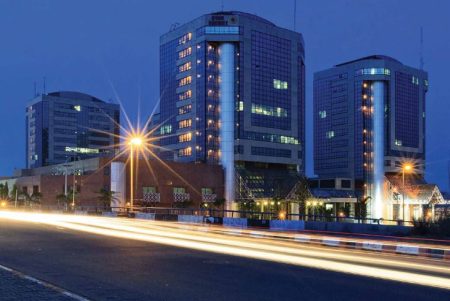
A US-based Nigerian confessed, “This is the first time I’ll be visiting a city where everything is new,” and indeed everything was new. The Qatar National Convention Centre, for instance, was specifically built just to host the WPC, thereby setting a record of the largest exhibition space ever for the congress, which holds once every three years.
Since inception, the congress has held once in Africa – the 18th edition, which held in South Africa. For Qatar, “this remarkable achievement (of successfully hosting the event) is an honour not only for Qatar, but the whole of the Middle East,” which was also hosting it for the first time, according to the countries’ Minister of Energy, Dr. Mohammed bin Saleh Al Sada.
He further noted that “The Congress has broken several new records in terms of number of delegates, exhibition space and the number of exhibitors participating in it.”
An excited Chairman, Organising Committee, 20th WPC, Issa bin Shahin al Ghanim, enthused, “A successful WPC will significantly elevate Qatar’s profile in business, tourism, in addition to reinforcing the state’s credentials as an efficient and reliable partner in the eyes of other members of the WP Council.”
Nigeria’s participation
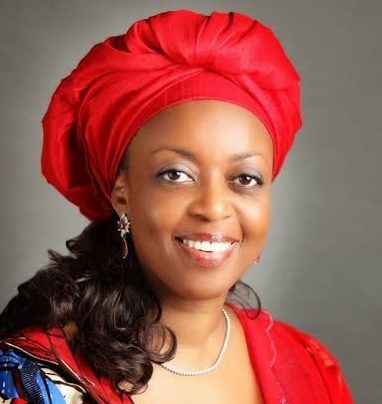
As usual, Nigeria was there with a very strong delegation led by the Minister of Petroleum Resources, Mrs. Diezani Alison-Madueke, supported by the Chairman, Nigerian National Committee, Dr. Osten Olorunshola.
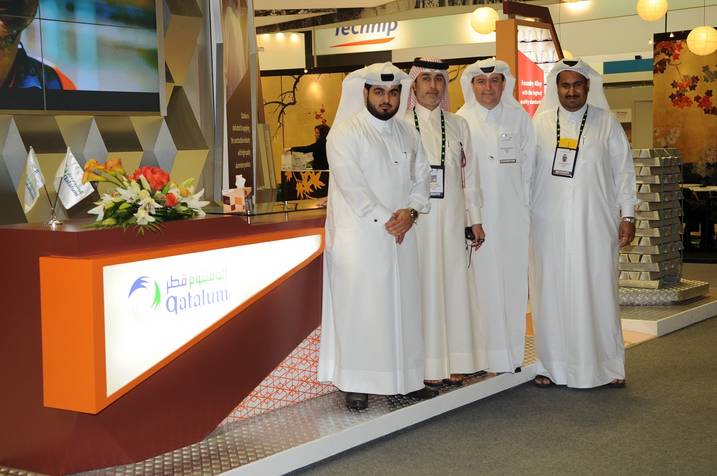
Most of the international oil companies (IOCs) operating in Nigeria had representatives, although their parent companies had individual stands. There were also some indigenous companies, while Bayelsa State, as had become its style at many international exhibitions, had its own stand separate from the Nigerian stand.
Interestingly, all the respondents admitted that it was the best outing for WPC. Also, the Nigerian stand was its best ever at any international exhibition, the glowing green-white-green paints made the booth to stand out in the large exhibition space and attracted many visitors to the booth.
The Emir of the State of Qatar, His Highness, Sheikh Hamad bin Khalifa al-Thani, and some state executives visited the Nigerian stand and spent a couple of minutes exchanging pleasantries with some Nigerian delegates to the excitement of the committee.
Sweetcrude was also prominently represented, as two of its staff, the Editor and one of its Correspondents were at the Congress, in addition to circulating hundreds of copies of the monthly energy industry publication (Sweetcruude).
Indeed, the cover of the Sweetcrude, which focused on the developments since the launch of Nigeria’s Gas Revolution, tallied with the message brought by the minister on the enormous potential for investments in the country’s fast growing gas industry, which cut across the whole value chain – liquefied natural gas (LNG), liquefied petroleum gas (LPG), gas gathering, pipelines installation, fertilisers and petrochemicals, to mention just a few. Alison-Madueke said there are more than $130 billion worth of investments up for grabs in the sector as well as in the upstream and downstream sectors.
Any lessons learnt?
Undoubtedly, Nigeria’s representation, as is its custom at such global events, was quite impressive, but the question on the minds of many is, “Did we as a people really learn anything from the totality of the experience?”
The answer to this question varies according to respondents. For the committee; it would be value for the huge funds spend for participation, and opportunity to sell Nigeria to the world with a view to attracting the much needed foreign direct investment (FDI). But to some analysts, “It is nothing but the shows.”
In their opinions: We keep having national rolling plans – five years, 10 years or more or less, yet we never get round to achieving anything. But look at Qatar; the city of Doha: the Marina side is only about eight years old, and see how much was established. Look at this convention centre, built in less than three years. Look at the infrastructure, look at everything, all working the way it should. Tell me what one thing that is working in Nigeria?”
They argued that the efficiency and effectiveness of the system in Qatar has nothing to do with the size and wealth or religion, but more of good leadership and active followership.
The Qatari Minister, speaking on the sidelines, said that government officials resign on the slightest scandal, adding that he dares not engage in any private investments of any sort while still in government.
He explained that whatever developments seen in Doha today were all initiated about 10 years ago, and as a country with zero tolerance for crime and corruption, leaders and the citizens must always uphold the integrity of the state.
Despite the apparent wealth and opulence of the country, everyone – citizens or foreigners – are encouraged to be prudent in the use of resources. For instance, even in the five star and lower star hotels, guests are urged not to be wasteful in the use of water and other amenities provided by the hotels.
But the reverse is the case with Nigeria, where waste is the order of the day, and leaders boldly indulge in acts of corruption without reprimands.