Precious Anga
Lagos — Ghana’s electric vehicle manufacturer SolarTaxi is positioning its production facility as a regional hub for electric vehicle manufacturing and exports, with Nigeria among the key markets it plans to target.
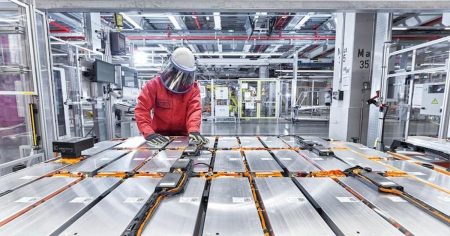
The company, now also known as ST Mobility, is investing $4.5 million in its Prampram facility in the Greater Accra Region, where it plans to establish four production lines for cars, two-wheelers, three-wheelers and 40-seat buses.
SolarTaxi is targeting an installed production capacity of 5,000 vehicles annually as it moves beyond importing and assembling vehicles towards deeper local production.
The company’s expansion is being supported by Ecobank, which has established an $8.35 million asset-financing facility covering two-wheelers, cars and buses. The bank is also supporting customer financing through Truzt, SolarTaxi’s platform for vehicle selection, credit, payments, maintenance and charging.
SolarTaxi plans to build its domestic market before expanding further into Africa, with ride-hailing operators, corporate fleets and public transport companies among its target customers. The company puts the value of its key order pipeline at $179 million.
Nigeria, Côte d’Ivoire and Senegal are among the markets SolarTaxi intends to enter, while the company says it has already made sales in Nigeria, Togo and Benin.
Founder Jorge Appiah said local assembly could give SolarTaxi an advantage over vehicles shipped directly from China because of shorter delivery times. He said vehicles ordered from China can take up to three months to arrive, compared with one to two weeks for vehicles assembled locally.
SolarTaxi also says incentives available to vehicle assemblers allow it to offer some vehicles at prices 30 to 40 per cent lower than comparable imported models. The company is also banking on the lower fuel and maintenance costs associated with electric vehicles to drive demand.
However, the company’s ambition to use Ghana as a regional export base faces a major test under the African Continental Free Trade Area, AfCFTA.
African Union leaders approved common rules for automotive products at their February 14-15, 2026 summit. Under the framework, vehicles and components must contain at least 40 per cent African-originating content to qualify for AfCFTA trade preferences, while non-African content cannot exceed 60 per cent.
The requirement does not mean all the 40 per cent African content must come from Ghana. SolarTaxi can source qualifying components from other African countries. However, a significant share of its vehicles and components currently comes from Asia, particularly China.
The company therefore needs to increase local and wider African sourcing as it moves from Enhanced Semi-Knocked Down assembly towards Completely Knocked Down production, where components are imported separately and more of the manufacturing process takes place locally.
Ghana is also preparing to tighten its local-production requirements for vehicle assemblers. President John Dramani Mahama announced on September 15 that the government was preparing a minimum local-production threshold for companies seeking VAT exemptions.
The proposed requirement is aimed at preventing vehicles that arrive almost fully assembled from receiving incentives after only limited work is carried out in Ghana.
Mahama also called for increased local production of automotive components, including batteries, tyres, glass, wiring harnesses, plastics and metal parts, as Ghana seeks to develop a more integrated automotive industry.
SolarTaxi faces another challenge in some of its potential export markets, where electric vehicles already enjoy substantial import concessions.
Togo’s 2026 Finance Law provides a 100 per cent reduction in customs value for new electric and hybrid vehicles for duty purposes, alongside VAT and other tax concessions.
In Benin, new electric four-wheel vehicles imported, manufactured or sold between January 1 and December 31, 2026, benefit from a 99 per cent reduction in customs value and a VAT exemption.
Such policies could reduce the tariff advantage of importing an electric vehicle from Ghana rather than directly from China.
SolarTaxi is consequently relying on more than preferential tariffs to compete in regional markets. The company is highlighting faster delivery, local-currency financing, maintenance, spare-parts availability and after-sales support as potential advantages.
With Ecobank operating across about 30 African countries, SolarTaxi also sees the bank’s regional network as a potential channel for finding customers, arranging financing and supporting expansion.
The company’s longer-term goal is to turn Prampram into a genuine African electric vehicle production and export centre. Achieving that goal will depend not only on reaching its planned 5,000-vehicle annual capacity, but also on increasing the share of value created in Ghana and elsewhere in Africa.