Mkpoikana Udoma
Port Harcourt — The Chief Executive Officer of Dangote Petroleum Refinery, David Bird, says the refinery will continue to meet Nigeria’s fuel demand despite rising global oil market volatility and supply disruptions.
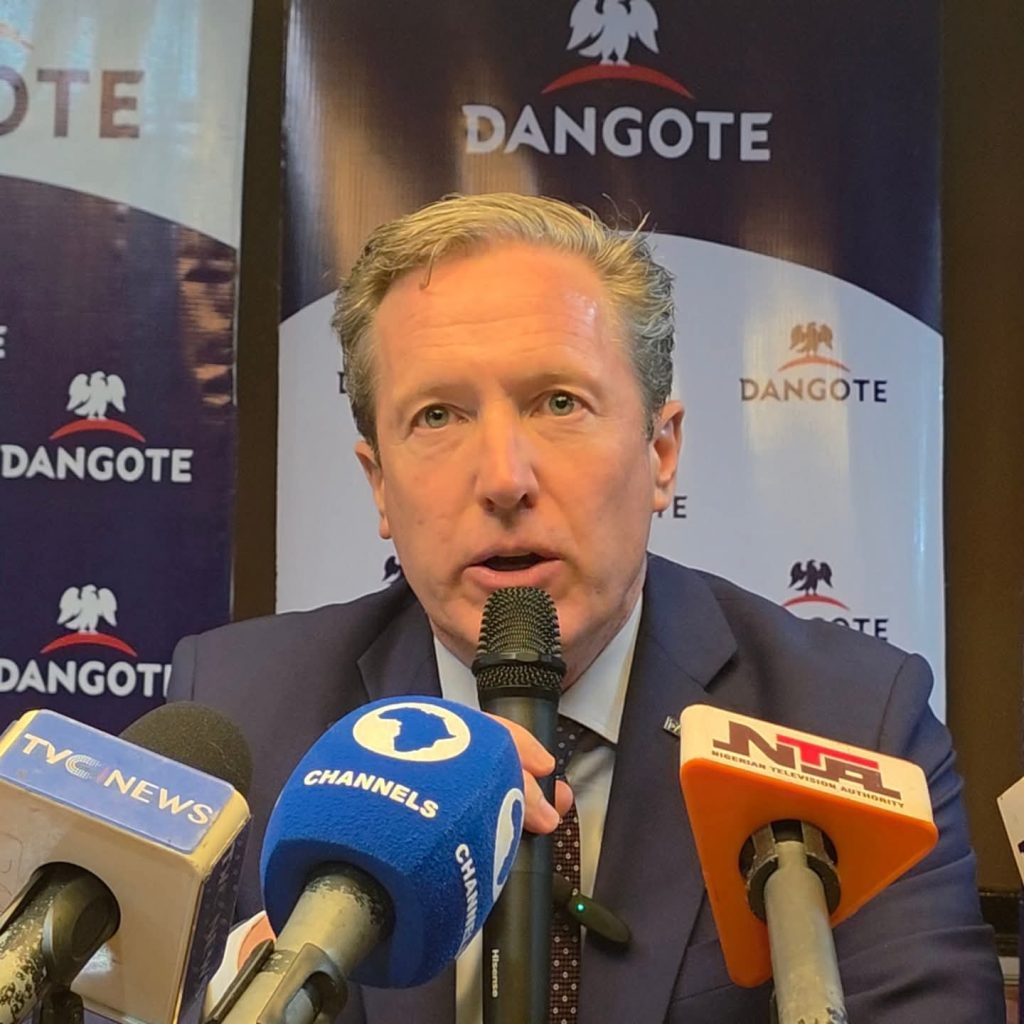
Speaking during a media chat on Monday, Bird said domestic refining has become critical to Nigeria’s energy security, noting that the refinery’s operations will help the country avoid fuel shortages even when international supply chains are under pressure.
“Domestic refining gives Nigeria supply security, ensuring the country avoids fuel shortages and queues even when global markets are disrupted,” he said.
According to him, the refinery remains fully exposed to international market conditions, including fluctuations in crude oil prices, freight charges, insurance costs, and financing expenses.
Bird explained that even under Nigeria’s crude-for-naira arrangement, the refinery purchases crude oil at international benchmark prices rather than receiving any form of discount.
“Even under the crude-for-naira arrangement, Nigerian crude is purchased at international benchmark prices,” he stated.
He also warned that countries heavily dependent on fuel imports are likely to face the greatest challenges as global oil markets experience heightened instability.
“Import-dependent countries are the worst hit as the global oil crisis escalates,” Bird said.
The refinery chief noted that crude prices have surged sharply within a short period, reflecting the level of volatility currently affecting the global energy market.
“Global oil markets are experiencing extreme volatility, with crude prices rising from the mid-$60 range to nearly $120 per barrel within a week,” he said.
Bird further revealed that logistics costs have climbed dramatically, with tanker freight rates rising significantly in the current market environment.
“Freight costs have surged dramatically, with tanker costs rising from about $800,000 to roughly $3.5 million per shipment,” he added.
Despite the market pressures, he said the refinery is operating at its full nameplate capacity of about 650,000 barrels per day, with the potential to increase production to around 700,000 barrels per day.
The refinery’s ability to maintain domestic supply could help stabilise Nigeria’s fuel market at a time when global oil supply chains remain highly unpredictable.