Lagos/Abuja — Nigeria’s energy sector has entered a critical stress-test period following the closure of the Strait of Hormuz, with the country’s newly established downstream autonomy and gas infrastructure now facing their first major external shock, according to the Q2 2026 Nigeria Energy Sector Outlook released today by the Society of Energy editors, SEE.
The outlook, which follows a Q1 agenda focused on domestic execution and consolidation, finds that Nigeria is better positioned to withstand a global supply crisis than at any point in the last decade—but warns that success in the coming months will depend on disciplined policy implementation and the management of several emerging risks.
Downstream: Autonomy Within Reach
The cornerstone of Nigeria’s resilience is the Dangote Refinery, which the report confirms is operating at 75–85% utilization with stable loading schedules. Combined with contributions from modular refineries, domestic refining now covers 75–85% of national demand, structurally reducing the country’s exposure to chaotic international product markets.
However, the outlook identifies a critical new risk: the potential diversion of domestic output to higher-priced export markets. “With global product prices sky-high, a key risk is the diversion of Dangote’s output to export markets,” the report states. “The government must enforce the domestic supply obligation (DSO) framework to ensure local market stability, leveraging the refinery’s crude allocation as a compliance tool.”
The fiscal implications are significant. With Brent crude trading in a volatile $95–$120 per barrel range, the government has opted to absorb the gap between global landing costs and domestic pump prices using windfall revenues, maintaining a PMS price band of ₦800–₦1,200 per litre. Diesel (AGO), fully deregulated, is projected to spike to ₦1,600–₦2,800 per litre, creating downstream inflationary pressures.
Upstream: Security and Contract Risks
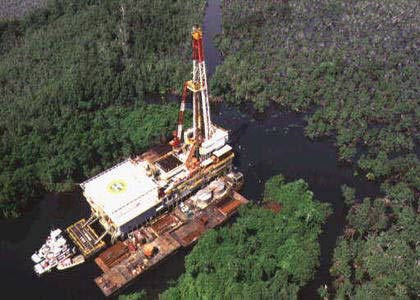
Crude and condensate production is projected at 1.65–1.80 million barrels per day for Q2, supported by deepwater reliability, early Ogoni momentum, and the imminent finalization of Shell’s onshore exit deal. However, the report flags two significant risks to this baseline.
First, higher global oil prices have intensified incentives for crude theft and pipeline sabotage. The risk exposure is estimated at 50–100 kbpd, and the government’s coordinated federal-state security tasking will be critical to preventing losses from eroding windfall gains.
Second, the report explicitly notes “ongoing bickering by reformed militant leaders over security contract of oil pipelines and facilities” as a potential disruptor. Industry sources indicate that disputes over the allocation and performance terms of pipeline protection contracts have created localized tensions. The government has been urged to initiate swift stakeholder engagement to resolve these issues before they impact production.
Gas and Power: OB3 Delivers, Liquidity Bites
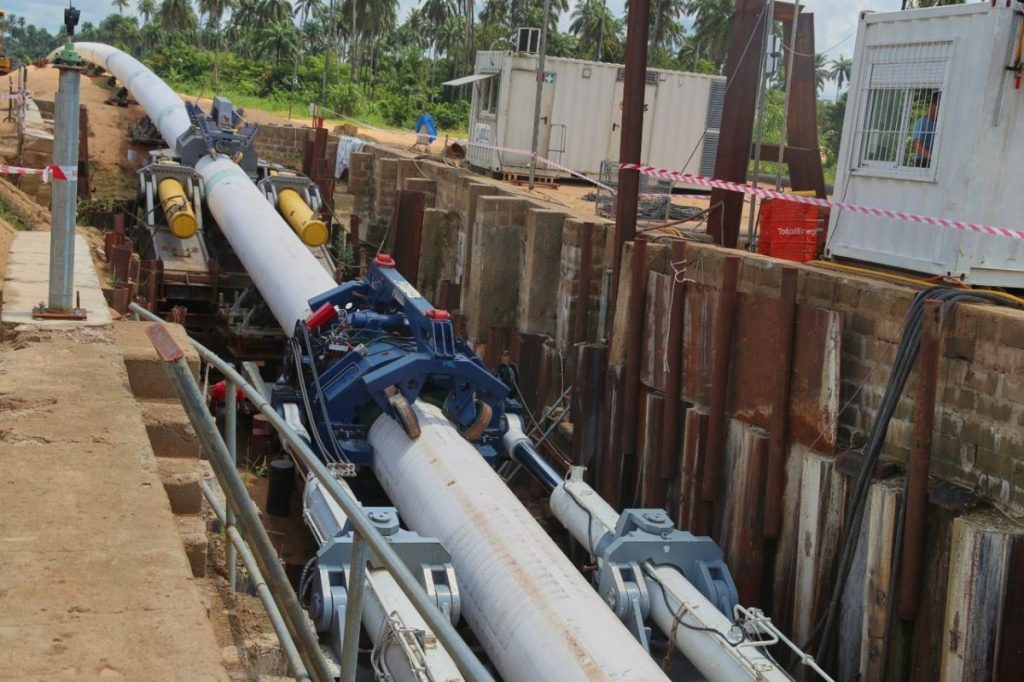
The successful commissioning of the OB3 gas pipeline is described as a “watershed moment,” providing the national grid with east-west gas balancing capability for the first time. This has improved load factors for thermal power plants and reduced historical dependence on the western Niger Delta.
But the report warns that the power sector’s persistent liquidity crisis has been exacerbated by the global price shock. Gas prices linked to international benchmarks have risen, while diesel costs for plant startup have spiked. Generation availability is projected at 3,500–5,200 MW—constrained not by gas supply but by distribution companies’ (DisCos) inability to settle market invoices at cost-reflective tariffs.
The outlook recommends a temporary, transparent liquidity injection from oil windfall revenues to bridge the gap, warning that “the gains from OB3 will be lost if producers redirect volumes to the more lucrative export market due to payment defaults from domestic power customers.”
Policy Priorities
The report outlines six key policy priorities for the quarter:
- Enforcing the Domestic Supply Obligation on Dangote and other refiners
- Providing a targeted liquidity bridge for the power sector
- Strengthening gas commercial discipline and payment guarantees
- Intensifying anti-theft operations with real-time surveillance
- Resolving disputes over pipeline security contracts through stakeholder engagement
- Prioritizing crude allocation to domestic refineries as a national security asset
Industry analysts will monitor several indicators in Q2, including whether Dangote’s cargoes continue to service domestic requirements or shift to exports, weekly trunkline integrity data, and whether the improved gas supply from OB3 translates to higher grid offtake or remains capped by DisCo liquidity constraints.
“If Nigeria navigates this quarter successfully,” the report concludes, “it will not only consolidate the gains of Q1 but will fundamentally alter its risk profile, demonstrating that its energy system is transitioning from a source of fragility to a pillar of resilience.”