Mkpoikana Udoma
Port Harcourt — The Media Awareness and Justice Initiative, MAJI, has called on the Federal Government to immediately end gas flaring and strengthen environmental regulation, warning that worsening pollution from oil and industrial activities continues to threaten public health and livelihoods across the Niger Delta.
Speaking at a press briefing in Port Harcourt to mark the 2026 World Environment Day, themed “Inspired by Nature. For Climate. For Our Future,” the group’s Lead Project Officer, Environment and Conservation, Mr. Ikechukwu Ahaka, said environmental degradation caused by oil exploration, industrial operations and pollution remained a major challenge in the region.
Ahaka said MAJI was reaffirming its commitment to environmental protection through data-driven climate action, stakeholder capacity building and real-time environmental monitoring under its Strengthening Data for Climate Action in Nigeria, SD-CAN, project, supported by the United Nations Democracy Fund, UNDEF.
According to him, the project is deploying low-cost air quality monitoring devices in communities across Akwa Ibom, Bayelsa and Rivers states to provide real-time pollution data and strengthen environmental accountability.
“At the Media Awareness and Justice Initiative, we don’t just celebrate nature; we stand up for it. Our project, Strengthening Data for Climate Action in Nigeria, is providing relevant and important real-time air quality data through the deployment of low-cost air quality monitors in communities and localities in Akwa Ibom, Bayelsa and Rivers states,” he said.
He explained that the automated sensors collect live air quality information which is analysed and uploaded to the DATACAB environmental portal, making environmental data accessible to community groups, civil society organisations, journalists, researchers, government agencies and the public.
“These automated sensors collect live quality data on pollution, which are analysed and made available on the DATACAB environmental portal. This data-driven platform helps community groups, NGOs, journalists, government agencies and concerned citizens become aware of the current air quality situation, make better climate decisions and hold polluters accountable,” Ahaka stated.
The environmental advocate noted that the initiative had also undertaken extensive capacity-building programmes for local communities, media practitioners, government agencies, researchers, persons with disabilities and civil society groups to promote data-driven environmental governance.
He said MAJI’s approach aligns with global climate action efforts by making environmental information open, transparent and accessible to support evidence-based advocacy and climate adaptation policies.
“By making environmental data open, transparent and accessible, we are empowering communities to engage in evidence-based advocacy, promote environmental accountability, and support climate adaptation policies that protect public health and communal livelihoods across the Niger Delta,” he said.
As part of its World Environment Day recommendations, MAJI called on government agencies and stakeholders to intensify efforts to reduce emissions of greenhouse gases and the use of ozone-depleting substances.
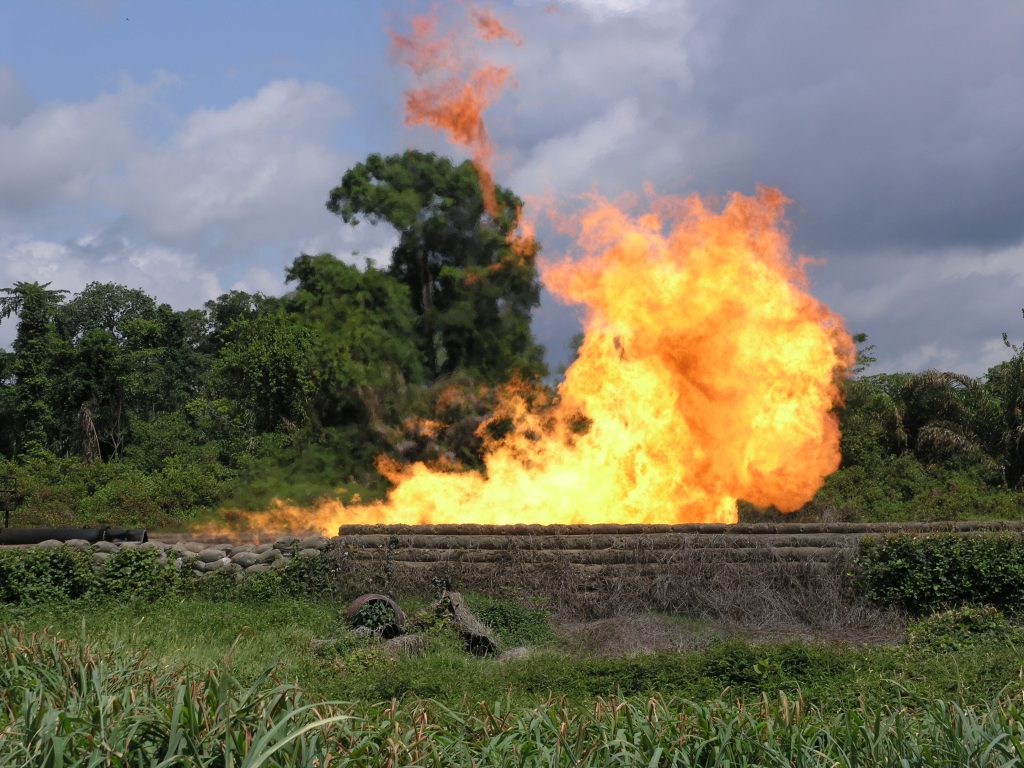
The group also urged the Federal Government to enforce a complete halt to gas flaring, describing the practice as environmentally harmful and inconsistent with Nigeria’s climate commitments.
“We call on the Federal Government to stop all forms of gas flaring as it has already been declared a crime in Nigeria, as it contributes to environmental pollution, negatively impacting lives, livelihoods and climate change,” Ahaka declared.
He further called for stronger environmental institutions equipped with the policies, manpower and technology required to effectively enforce environmental regulations, while urging oil companies to end indiscriminate pollution and gas flaring in host communities.
Ahaka emphasized the need for multi-stakeholder collaboration and inclusive climate sensitisation programmes targeting both rural and urban communities affected by climate change, stressing that small actions can deliver significant impacts in protecting nature and securing the future.