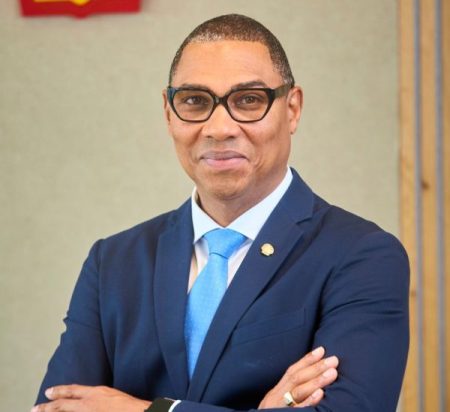
11 September 2012, Sweetcrude, ABUJA – PROF Wole Soboyejo, President and Provost, African University of Science and Technology, AUST, Tuesday, warned against the use of chemicals in the planned clean-up of oil pollution in the Niger Delta region.
Soboyejo said in Abuja that it would be safer to use bacteria to clean up the oil spills rather than chemicals, maintaining that the university in collaboration with other scientific organisations was working on the possibility of adopting the use of bacteria as a method for the clean-up exercise of the polluted Delta region.
A recent UNEP report on the Niger Delta pollution revealed that Nigeria would require one million dollars to clean-up the extent of contamination in the oil-rich region.
The report said that amount would be an initial payment for a sweeping environmental restoration of the Niger Delta and that the exercise could take 30 years.
Specifically, the polluted Ogoni land is characterised by creeks, swamps, waterways and huge reserves of oil which have enabled Nigeria to become the world’s 8th largest oil exporter.
However, decades of exploration by national and multi-national oil corporations had contaminated and destroyed the region’s land and fresh water resources, leaving the residents in abject poverty.
However, Soboyejo noted that if the ongoing research on the use of bacteria for the clean-up exercise of the region was carried out to a logical conclusion, it would serve the affected community better than the use of chemicals.
The university provost said that the use of bacteria would be a more natural source of clean up, noting that the use of chemicals could further contaminate the environment.
He said that the natural clean up method was devised by a student of the university some years ago after discovering that there was a problem in the oil rich areas with breaking down emulsions (oil-water mixtures).
Soboyejo said that the student developed a method that essentially manages emulsion problems for industries
“We found again that there are certain bacteria that breakdown crude oil, so, we introduced these into crude oil and it showed that over time the structure started to degrade and separate.
“Effectively, we characterised that breakdown as a function of time that basically shows that this process can work but the question is: what is the optimum temperature? What is the optimum time? What are the optimum conditions in terms of bacteria concentration?
“So where we are is to show that the bacteria that we have, some of them do breakdown crude oil but we need to do further work to really get this up because of its importance in the Niger Delta, I am sure you can see why we are doing this work.
“If we have the possibility of cleaning up the Niger Delta by releasing certain bacteria into the water then it’s likely to be a more natural clean up than just using chemical methods that might contaminate the environment. ’’
According to him, the advantage of the research at the university is that it brings together physicists, biologists and chemists who traditionally do not work on the same project as a team.
The don, however, said that the research had witnessed a little setback as the student had been engaged by a company in Holland due to his creativity.
Soboyejo said that the university had invited the student and awarded him with “innovation fellowship”.
He said that the gifted student had also been supported to pursue the research with funding from STEP-B.
The university provost unfolded plans by the university to recruit some gifted students, who he said, would focus more in researches but noted that for significant impact to be achieved, the university would need a minimum of five students to handle such research.
Soboyejo said there were evidences that marine bacteria could also be adapted to accelerate the process.
“There is evidence that the marine bacteria can also be adapted to accelerate the process, so that is the direction we are trying to go but we need to recruit more people to make progress.”