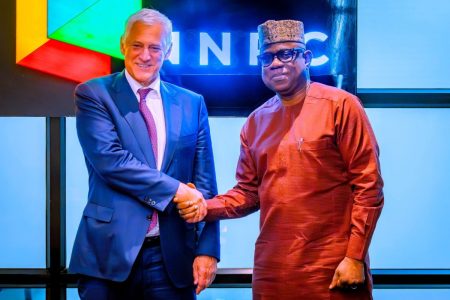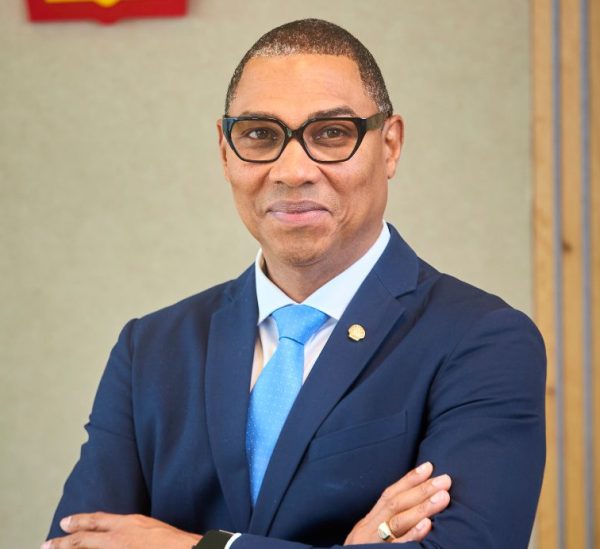
Lagos — Before his posting to Nigeria, Ronald Adams served as the Chief Executive Officer (CEO) of Atlantic LNG in Trinidad and Tobago. He assumed his role as the Managing Director of the Shell Nigeria Exploration and Production Company Limited (SNEPCo) on October 1, 2024. In this interview with SweetcrudeReports, he addresses a wide range of issues including the company’s engagement strategy going forward, Nigerian Content compliance, climate goals adaptation, etc.
Excerpts:
Nigeria remains a hub for Shell’s global operations. How would you describe SNEPCo’s strategy in Nigeria over the next five years?
SNEPCo’s strategy in Nigeria over the next five years is focused on strengthening our position in deepwater and integrated gas, while continuing to deliver safe and reliable operations.
We will build on our track record at Bonga by sustaining production performance and progressing key growth projects such as Bonga North. At the same time, we are expanding our gas portfolio through initiatives like the HI project, supporting both domestic energy needs and export opportunities.
A key priority will be maintaining competitiveness, ensuring our projects remain attractive for investment by focusing on efficiency, disciplined execution, and working within a stable and enabling regulatory environment. We will also continue to deepen collaboration with government and industry stakeholders, while supporting local content and broader economic development.
What are the key growth areas for SNEPCo in Nigeria, and how do you balance exploration with the country’s evolving energy needs?
SNEPCo’s key growth areas in Nigeria are deepwater and gas, where we have strong capabilities and see the greatest long-term potential.
In deepwater, we continue to build on our leadership position with assets like Bonga and new developments such as the Bonga North project, which will help sustain production and extend the life of the asset. Alongside this, we continue to pursue targeted deepwater exploration to grow the portfolio and unlock new opportunities for value creation.
Gas is also an increasingly important growth area, as Nigeria looks to leverage its significant resources to support domestic energy needs and exports. Projects like HI gas reflect our commitment in this space.
In terms of balance, our approach is to align investment decisions with Nigeria’s evolving energy priorities, supporting reliable oil production while also increasing gas supply, which plays a critical role in powering the economy and enabling a lower-carbon energy mix.
Overall, we focus on developing resources responsibly and efficiently in a way that delivers value for both Nigeria and Shell.
Nigerian content has been a major policy emphasis. Can you share examples of successful Nigerian supplier development programs and how they’ve impacted local businesses and jobs?
Nigerian content has been a defining part of Bonga’s success, and our supplier development efforts have helped build both local capability and jobs across the value chain. Over the years, SNEPCo has supported Nigerian companies to take on increasingly complex work in deepwater operations, from fabrication to engineering and offshore services. For example, three Bonga modules were designed and built in Nigeria, while key components such as the foundation piles for the FPSO, the risers, and the Single Point Mooring buoy were also constructed in-country.
These efforts have helped strengthen indigenous technical capacity, created opportunities for local businesses to grow, and supported the development of skilled Nigerian jobs in areas such as construction, maintenance, inspection, and operations.
More recently, during the 2026 turnaround maintenance campaign on the Bonga FPSO, over 1,000 personnel worked offshore, with more than 95% of them being Nigerians. That is a strong reflection of how local capability has grown over time, not only in the workforce, but also across the supplier base that supports our operations.
We are proud that these efforts have been recognised by industry bodies, including Most Local Content Friendly IOC Award by the Nigerian Chamber of Shipping 2016, Human Capital Advancement Award 2025 by the Oil and Gas Trainers Association. We remain committed to deepening Nigerian content through supplier development, skills transfer, and long-term partnerships with local businesses.
What steps is SNEPCo taking to strengthen safety culture across exploration and production activities?
Strengthening safety culture starts with leadership commitment and extends across every level of our operations. At SNEPCo, safety is our number one priority, and our goal is simple: that every employee and contractor returns home safely at the end of each day.
We reinforce this culture through regular safety drills, scenario-based emergency response exercises, and continuous learning from both real and simulated incidents. We also work closely with our contractors and partners through HSE engagement forums, where we review risks, share lessons, and agree practical mitigations.
In complex deepwater operations, safety has to be embedded in every activity, from planning to execution. Major operational campaigns, including the successful turnaround maintenance at the Bonga FPSO, reflect the discipline and collaboration required to deliver work safely and efficiently.
Ultimately, strengthening safety culture is about consistency, leadership visibility, and making safe behaviour a non-negotiable part of how we operate every day.
How is the company integrating climate considerations and environmental stewardship into its long-term planning in Nigeria?
Climate considerations and environmental stewardship are important factors in how we plan and operate in Nigeria over the long term. Our approach is to develop energy projects responsibly while working to reduce the environmental footprint of our operations.
In practical terms, that includes continued efforts to reduce flaring, improve energy efficiency, and monitor and reduce methane emissions across our deepwater activities. We are also part of broader industry efforts aimed at improving air quality and addressing short-lived climate pollutants, particularly methane.
At the same time, we recognise that Nigeria’s energy transition must reflect the country’s development realities, especially the need to expand access to reliable energy. That is why gas remains an important part of our energy solution, supporting economic growth while helping to lower emissions relative to other fuels.
Overall, our long-term planning is focused on balancing energy delivery, environmental responsibility, and support for Nigeria’s evolving energy needs.
What policy reforms or government actions would you most like to see to unlock greater investment in Nigeria’s oil and gas sector?
The most important priority is a stable, predictable, and competitive investment environment. Nigeria has made progress through recent reforms, and those steps are encouraging, but consistency of implementation will be critical to unlocking greater capital.
Investors look for clarity on fiscal terms, efficient and transparent regulation, and confidence that approvals can be secured within reasonable timelines. So key actions would include streamlining licensing and permitting processes, reducing administrative delays, providing greater clarity on fees and levies, and eliminating overlaps in regulatory functions.
Security and operational stability are also essential. When these elements come together – competitive policy, regulatory certainty, and a safe operating environment – Nigeria is well positioned to attract the right investment for the right projects at the right time.
What steps is SNEPCo taking to attract, develop, and retain Nigerian talent at all levels of the organization?
Attracting, developing, and retaining Nigerian talent is a core priority for SNEPCo, and we approach it as a long-term pipeline, from early exposure to leadership development.
We begin by creating opportunities for young people through programmes such as SIWES and our graduate development programme, which give students and early-career professionals practical experience and structured pathways into the business. These programmes help us identify and develop future talent at an early stage.
Beyond recruitment, we invest in continuous capability building through mentoring, technical development, and exposure to global best practices across the industry and Shell’s wider network. This helps employees grow both professionally and personally, while preparing them for increasingly complex roles.
Retention is supported by a culture that values inclusion, well-being, flexibility, and career mobility. The combination of development opportunities, meaningful work, and global exposure makes SNEPCo a place where talented Nigerians can build long-term careers.
How do you ensure inclusive leadership and gender parity within high-skilled roles in your operations?
Inclusive leadership starts with creating an environment where everyone can contribute, grow, and be heard, and that applies across all roles, including highly skilled technical positions.
At SNEPCo, we work to build that culture through fair people practices, leadership accountability, and systems that support equal opportunity and address inappropriate behaviour where it occurs. We want all employees to feel respected, supported, and able to perform at their best.
SNEPCo is part of a wider Shell culture that places strong emphasis on inclusion, and that commitment is visible from the top. In our operations, we focus on creating an environment where people in high-skilled roles have equal opportunity to develop, contribute, and lead, supported by fair people practices, sponsorship, and networks such as the Women in Shell Network.
Ultimately, inclusion is not just about representation, but also about ensuring people from different backgrounds have the opportunity to thrive, lead, and shape the future of the business.
What milestones should Nigerians expect from SNEPCo in the near term?
In the near term, Nigerians should expect SNEPCo to remain focused on safe, reliable, and efficient deepwater operations, while progressing key projects that can deliver long-term value to the country.
That includes sustaining strong performance at Bonga and advancing major developments such as Bonga North and the HI gas project. These are important milestones for future production, gas supply, and continued investment in Nigeria’s energy sector.
Nigerians should also expect us to continue supporting local content and capability development, as well as partnerships that strengthen technical capacity, such as the recently commissioned Geosciences Centre of Excellence at the University of Lagos.
Overall, the near-term focus is on responsible operations, project delivery, and creating lasting value through investment, skills development, and energy supply.
If you had one message for Nigerian policymakers, investors, and the public about the role of Nigeria’s oil and gas sector in the country’s future, what would it be?
Nigeria’s oil and gas sector will continue to play a vital role in the country’s future, supporting energy security, economic growth, government revenue, jobs, and industrial development.
The opportunity now is to harness that role responsibly and competitively, in a way that attracts investment, expands domestic energy access, and creates lasting value for Nigerians.
With the right policies, strong collaboration, and disciplined execution, the sector can remain a powerful engine of progress while also supporting the country’s broader energy transition.