Precious Anga
Lagos — Nigeria is set to host what is projected to be the largest solar-powered steel manufacturing facility in sub-Saharan Africa after the Niger State Government allocated 500 hectares of land to Abuja Steel Mills Limited, a subsidiary of the African Industries Group.
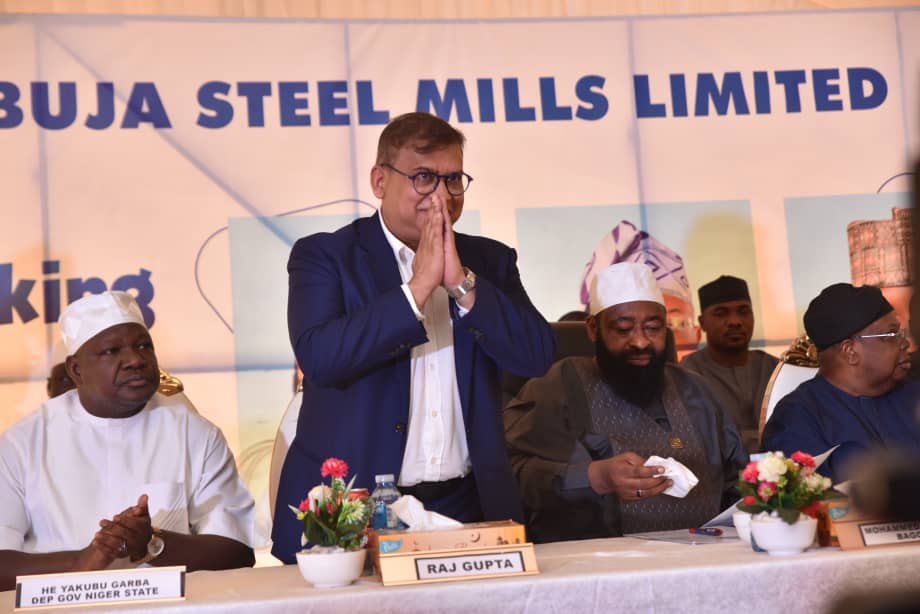
The development was announced during the official groundbreaking and land handover ceremony held over the weekend. Stakeholders described the project as a major step toward strengthening Nigeria’s industrial base while advancing renewable energy adoption.
Chairman of African Industries Group, Raj Gupta, said the company views the project as more than an industrial investment, stressing that it is designed to create jobs and improve livelihoods.
“For us, this historic day where we are being given this land is not just an opportunity to build industry and create jobs, but its main purpose is development, upliftment, and empowerment of people,” Gupta said.
He added: “This project will perhaps be the largest in sub-Saharan Africa, putting Nigeria not only on the world steel map but also on the world’s renewable energy map.”
Minister of Power, Joseph Tegbe, said the Federal Government is pursuing reforms aimed at addressing longstanding challenges in the electricity sector to support industrial growth and investment.
“We are working to resolve the fundamental contradictions that have made electricity a source of national frustration rather than national productivity,” Tegbe said, while assuring investors that critical infrastructure required for the project remains a priority.
The minister also commended Niger State Governor, Mohammed Bago, for attracting private-sector investments capable of stimulating economic growth and industrial development.
Minister of Steel Development, Shuaibu Audu, said the proposed facility aligns with President Bola Tinubu’s vision of building a $1 trillion economy by 2030.
“They have invested billions of dollars and contributed massively to the vision of Mr President to grow the economy,” Audu said, referring to the African Industries Group.
Governor Bago said industrialisation remains a key objective of his administration and explained that the land allocation forms part of broader efforts to transform Niger State into a major manufacturing hub.
“Our vision of building a new Niger is steadily becoming a reality,” the governor said, while encouraging the company to prioritise local employment opportunities for residents.
Also speaking, Minister of State for Industry, John Enoh, said the success of Nigeria’s newly unveiled National Industrial Policy will depend largely on private-sector participation and execution.
“The government cannot deliver on productivity without events of this nature. The missing gap is productivity. The missing gap is manufacturing,” Enoh said.
He noted that the steel project has the potential to reduce Nigeria’s import dependence, strengthen local manufacturing capacity and create thousands of jobs across the value chain.