Precious Anga
Lagos — The United States has brought its largest renewable energy infrastructure project into operation, marking a major milestone in the country’s transition toward cleaner power generation and expanded grid capacity.
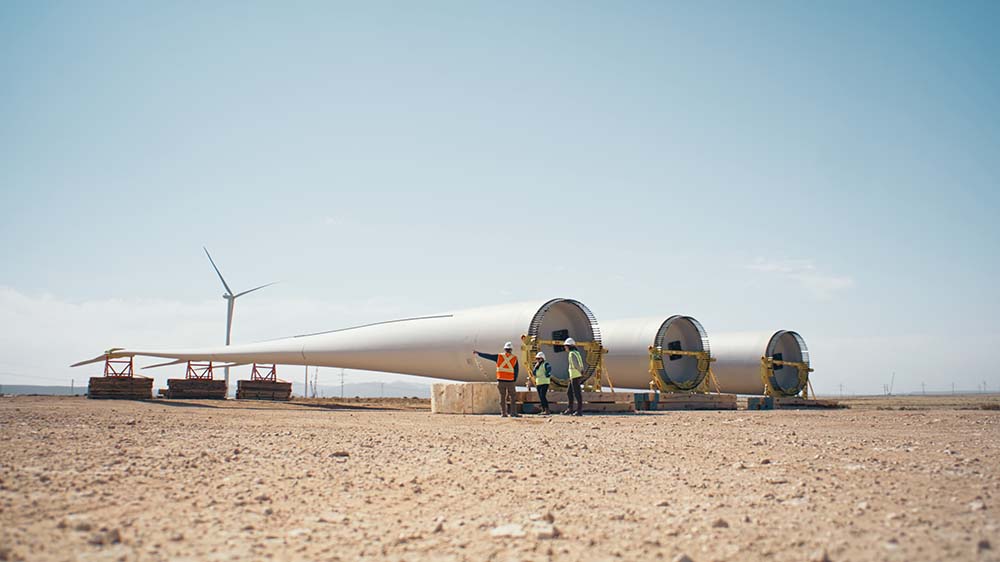
Energy developer Pattern Energy announced the completion and energisation of the SunZia project, a massive wind power and transmission network stretching across the states of New Mexico and Arizona. The company described the development as the largest renewable energy infrastructure project ever constructed in the United States.
At the heart of the project is about 3,650 megawatts of wind generation capacity, supported by a 550-mile high-voltage direct current transmission line designed to move electricity efficiently across the western United States. Once fully operational, the facility is expected to generate enough electricity annually to power roughly one million homes.
The project represents the culmination of an 18-year development process involving regulatory approvals, financing arrangements, construction activities and coordination among federal and state authorities, utility companies, landowners and local communities. Construction formally commenced in September 2023, with the project reaching commercial operation on schedule and within budget.
The launch comes as electricity demand across the western United States continues to rise due to population growth, industrial expansion, electrification initiatives and the rapid development of energy-intensive data centres. While renewable generation capacity has expanded significantly in recent years, insufficient transmission infrastructure has emerged as one of the biggest obstacles to delivering power from generation sites to consumers.
SunZia addresses that challenge through one of the largest high-voltage direct current transmission systems built in the United States in decades. HVDC technology allows electricity to travel long distances with lower energy losses than conventional alternating current systems, making it particularly effective for linking remote renewable energy resources with major population centres.
Industry experts have repeatedly identified transmission expansion as a critical component of maintaining grid reliability and integrating increasing volumes of renewable energy into the power system. The project is expected to improve interstate electricity flows while strengthening the resilience and flexibility of the western U.S. power grid.
Beyond its energy contribution, SunZia is projected to deliver substantial economic benefits. According to Pattern Energy, more than 2,000 workers were employed during peak construction, while over 100 permanent operational jobs will remain in New Mexico and Arizona. The company estimates the project will generate more than $20 billion in regional economic activity and contribute approximately $1.3 billion to local governments, schools, counties and private landowners over its first 30 years of operation.
The completion of SunZia adds to a growing pipeline of major transmission and renewable energy projects across the United States, highlighting the increasingly important role of grid infrastructure in supporting long-term energy growth, reliability and decarbonisation efforts.