 Mkpoikana Udoma
Port Harcourt — Environmental stakeholders have called on the Federal Government to immediately commence a comprehensive environmental audit of the Niger Delta as a first step toward full-scale cleanup of the oil-impacted region.
The call was led by Executive Director of Health of Mother Earth Foundation, HOMEF, Nnimmo Bassey, in Port Harcourt during the opening ceremony of the 2026 Correspondents’ Week of the Rivers State Council of the Nigeria Union of Journalists.
The event, themed “The Imperatives of Comprehensive Cleanup of the Niger Delta Environment: Role of the Media,” was supported by Renaissance Africa Energy Company Limited, Nigeria LNG and Kebetkache Women Development Centre.
Bassey said the time for debate over whether the Niger Delta should be cleaned up was over, insisting that government must move immediately to environmental assessment and remediation.
“The Federal Government must kick-start audit of the Niger Delta environment for cleanup of the region to start,” he said.
“Time has gone beyond debating whether to do Niger Delta cleanup or not. The time now is to start the audit of the environment of the region and kick-start cleanup.”
The environmentalist warned that continued delays would worsen ecological destruction and make restoration more difficult and costly in the future.
He also drew attention to the scale of oil pollution in the region, comparing daily spill volumes in the Niger Delta to some of the world’s worst recorded oil disasters.
He said the volume of oil spilled in the Niger Delta in a single day could equal the scale of major global spills such as the Deepwater Horizon disaster in the Gulf of Mexico in 2010, which released about 134 million gallons of crude oil.
Bassey accused government institutions, regulators and political leaders of deliberately downplaying the environmental crisis.
“The silence of oil authorities, regulators, the political leaders, etc, was deliberate. Nobody cares about the environment of the Niger Delta,” he said.
The activist argued that Nigeria’s dependence on crude oil has weakened other productive sectors of the economy, especially agriculture and infrastructure development.
“Nigeria was better off without oil,” Bassey declared.
“Before oil was discovered, we had vibrant education, good infrastructure. We had agriculture. Nigeria was the main exporter of food before oil became a major revenue earner.”
He said the oil economy entrenched a consumption and borrowing culture that replaced productive economic systems that existed before crude oil dominance.
“Then our Head of State said, the problem is not money but how to spend it. Then we started spending, started borrowing,” he said.
Bassey described extractive oil dependence as a continuation of colonial economic structures that prioritize export of raw materials over local development.
“Extractivity is colonial, just like the idea of cash cropping. Instead of cultivating food, you are exporting raw materials and making money with no food to feed yourself.”
He urged Nigeria to consider stronger engagement with emerging global alliances such as BRICS, arguing that the current global economic system is dominated by a few powerful nations.
On environmental risks, Bassey warned that the Niger Delta could be permanently abandoned to pollution if cleanup is not carried out before global fossil fuel decline accelerates.
“If the Niger Delta is not cleaned now when people are still buying oil, then we are sold,” he said.
He criticised multinational oil companies for continuing to profit from environmental damage while communities bear the consequences of pollution.
“Clean up the mess. Nobody has the right to poison water, poison our soil, poison our air, and then run away to the bank with profits. That is totally immoral and unacceptable.”
Bassey insisted that all operators in the Niger Delta, including the Nigerian National Petroleum Company Limited and international oil firms, must be held accountable for environmental degradation.
He also rejected the routine attribution of oil spills to sabotage, arguing that ageing infrastructure and poor maintenance are major causes of pollution incidents.
“When you see rotten pipelines, pipelines put in exposed places, not protected, not replaced when they are meant to be replaced, then it sounds silly to blame every spill on vandalism,” he said.
“Your pipelines laid over 50 years ago are obsolete, expired, and ought to be replaced.”
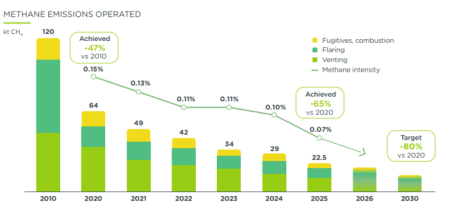
Bassey further condemned ongoing gas flaring in the region despite court rulings declaring the practice illegal and a violation of the right to life.
“What we need to do is to stop gas-flaring because it’s an iniquity and it’s against the right to life,” he said.
He added that affected communities increasingly seek justice in foreign courts due to lack of enforcement of environmental rulings within Nigeria.
“They are divesting to evade responsibilities,” he said.
Bassey urged journalists to intensify coverage of environmental issues in the Niger Delta, warning that public silence enables continued ecological destruction.
“The fact that we are holding this conference today is a message to the government at all levels. They cannot keep on pretending that all is well because all is not well.”