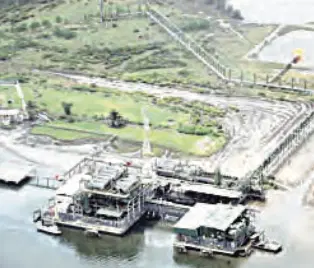
Port Harcourt — In the early hours of June 5, 2026, the Nigerian Navy announced what appeared to be a decisive blow in the murky waters of the Niger Delta. Under the auspices of Operation Delta Sentinel, personnel from the NNS Soroh descended on the Okolomade community along the Rivers–Bayelsa border. There, concealed beneath thick vegetation, they discovered 138 sacks filled with 92,660 litres of suspected illegally refined Automotive Gas Oil (AGO), commonly known as diesel.
The Navy hailed the operation as evidence of “increasing reliance on concealed creek-side storage” by criminal networks, reaffirming a commitment to intelligence-driven disruption.
Yet, on the heels of this recovery comes a troubling question that undermines the celebration of the 92,660 litres seized: If the security forces know where the criminals hide their product, why do the kingpins remain not only free but flourishing?
Recent admissions from the highest levels of the military, juxtaposed with the never-ending seizures, paint a picture of a war that is being won in the skirmishes but lost in the strategy largely due to the rot within the barracks itself.
The “Breakthrough” Paradox
On paper, the Navy is performing admirably. The seizure of nearly 100,000 litres of diesel is not a small feat; it denies economic saboteurs resources and temporarily disrupts supply chains.
However, the narrative of the “bust” fits a pattern that has become all too familiar to observers of the region. The military arrives, burns a few storage tanks or seizes sacks of product, and the suspects, usually low-level laborers, melt back into the maze of mangroves.
The Commander of Operation Delta Safe, Rear Admiral Olugbenga Oladipo, recently shed light on why these operations often feel like rearranging deck chairs on a sinking ship. He revealed that illegal refiners are evolving. No longer reliant on the smoky, detectable open burns, they now use “chemicals to mix with crude oil to produce adulterated petroleum products,” a method designed specifically to evade patrols.
If the criminals are innovating faster than the security forces can adapt, it suggests a flow of intelligence and resources that runs both ways.
The Bunkerers in Uniform
The most explosive accusations regarding oil theft do not come from Niger Delta militants, but from the very unions and officials meant to protect the industry.
In a stunning 2022 testimony before the Senate, the Petroleum and Natural Gas Senior Staff Association of Nigeria (PENGASSAN) alleged that the military is the single largest obstacle to ending oil theft. Festus Osifo, the association’s president, claimed that security operatives actively bribe their superiors to secure postings to the Niger Delta. The reason? Not patriotism, but profit.
“It is a well-known but unspoken reality,” a security analyst in Port Harcourt, who requested anonymity for safety, told this reporter. “The allowance for a junior officer in the North might be a few thousand Naira. Down in the creeks, if you look the other way, you can make a year’s salary in a month.”
The Senate investigation in 2022 heard testimonies that when a former Commander of the Amphibious Brigade in Port Harcourt was removed, his men resisted redeployment fiercely, unwilling to leave the “lucrativeness” of their operational area.
This is not merely a case of petty corruption. It is structural collusion. A deep-dive investigation by TELL Magazine revealed that in many instances, the illegal bunkering sites are owned or heavily protected by personnel of the Army, Navy, and Civil Defence. “You have one military gunboat by the right; you have one navy gunboat to the left. At the extreme (middle) is where this bunkering is taking place,” a source told the magazine, noting that it was impossible to load a vessel without settling the security personnel on both sides.
The Untouchable Kingpins
Perhaps the most telling sign of the military’s complicity or impotence is the profile of those arrested.
In a candid interview on Channels Television on June 5, 2026, the Chief of the Naval Staff, Vice Admiral Idi Abbas, made a startling confession. Despite the daily seizures, the “masterminds” behind the theft remain “elusive.” He described a highly compartmentalized syndicate where the Navy only captures “the face” of the operation, the labourers and the local burners, while the financiers and former militant leaders remain in the background.
“Most of the faces behind these thefts are not really known or are not the ones we always catch,” Abbas admitted, noting that the men arrested are often paid small sums and “don’t even know who they are working for”.
This dynamic creates a perfect impunity loop. The low-level operative goes to jail (or buys his way out), the contaminated diesel is seized, the press release is issued, and the next night, a pipeline is tapped again.
This is further complicated by the Federal Government’s strategy of awarding multi-billion-naira pipeline surveillance contracts to former militant leaders, such as Government Ekpemupolo (Tompolo). While Tompolo’s Tantita Security Services has been credited with exposing illegal tapping points, unearthing over 156 illegal connections, critics argue that this legitimizes the very structure of violence that created the theft economy. It creates a dependency where the state outsources security to those who once led the insurgency, blurring the line between watchdog and wolf.
The Stakes of Silence
The economic implications are devastating. PENGASSAN estimated that Nigeria was losing roughly 600,000 barrels of crude oil per day to thieves, a figure that cripples the national budget and denies the federation account billions of dollars needed for infrastructure.
Vice Admiral Abbas has called for a practical solution: the establishment of a special court to try maritime criminals. Currently, the Navy spends a fortune maintaining seized vessels and waiting years for prosecution. A dedicated court would fast-track justice and ease the burden of “keeping and maintaining some of the arrested vessels”.
While that is a logistical fix, it does not solve the ethical one.
Until security postings to the Niger Delta become a deterrent rather than a financial incentive, and until the military leadership roots out the “generals” profiting from the soot and pollution, the “breakthroughs” will remain cyclical.
The 92,660 litres recovered in Okolomade will likely be destroyed or dumped. But as the smoke clears, one must ask: Were the naval officers who conducted that raid looking for the diesel or were they competitors in the same dirty game, intercepting a shipment that wasn’t theirs? In the complex calculus of the Niger Delta, both are equally plausible.