Mkpoikana Udoma
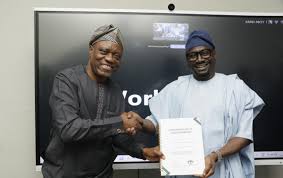
Port Harcourt — The Rural Electrification Agency, REA, and the National Bureau of Statistics, NBS, have signed a Memorandum of Understanding, MoU, to conduct a National Energy Survey aimed at strengthening data-driven electrification and attracting targeted investments into Nigeria’s power sector.
The survey is expected to deploy the World Bank’s Multi-Tier Tracking Framework, MTF, to generate detailed data on electricity access, affordability, reliability and the penetration of off-grid solutions, particularly in rural and underserved communities across Nigeria.
The initiative is expected to provide a stronger empirical foundation for national energy planning, including the implementation of the National Electrification Strategy and Implementation Plan, NESIP, while also guiding private sector participation in grid and off-grid power projects.
Speaking at the MoU signing, Managing Director and Chief Executive Officer of REA, Dr. Abba Aliyu, described the collaboration as a major step towards evidence-based electrification planning.
“This partnership reinforces our commitment to transparent, data-driven electrification that leaves no community behind,” Aliyu said.
“With credible and granular data from the MTF survey, we will be better positioned to design interventions that improve electricity availability, affordability and reliability across Nigeria.”
He also acknowledged the technical role of the National Bureau of Statistics and the support of development partners, noting that the survey aligns with global best practices in energy access measurement.
“We appreciate the Statistician-General and the NBS team for their technical support, as well as the World Bank, through ESMAP, for backing this critical initiative,” Aliyu added.
On his part, Statistician-General of the Federation, Prince Adeyemi Adeniran, said the collaboration underscores the growing importance of data in shaping sustainable energy policies.
“This survey will provide policymakers, investors and stakeholders with reliable statistics to support informed decision-making in the power sector,” Adeniran said.
“Quality data is essential for effective planning, monitoring and evaluation of Nigeria’s electrification goals.”
The National Energy Survey is further expected to generate insights that will support government reforms, enhance investor confidence and accelerate progress towards universal access to electricity, especially in rural and off-grid communities.