Close Menu
    Facebook X (Twitter) Instagram
    Facebook X (Twitter) Instagram
    SweetCrudeReportsSweetCrudeReports
    Subscribe
    • Home
    • Oil
    • Gas
    • Power
    • Solid Minerals
    • Labour
    • Financing
    • Freight
    • Environment
    • Community Development
    • Renewable Energy
    • E-Editions
    SweetCrudeReportsSweetCrudeReports
    Home » Rising oil prices unlikely to unlock spare OPEC capacity

    Rising oil prices unlikely to unlock spare OPEC capacity

    January 16, 2018
    Share
    Facebook Twitter LinkedIn WhatsApp
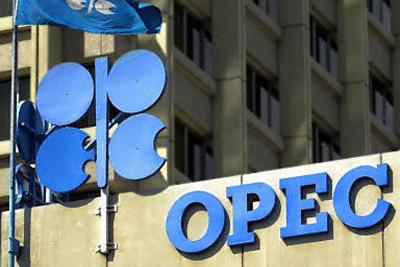
    *OPEC headquarters, Vienna, Austria.

    16 January 2018, News Wires – OPEC’s significant spare production capacity is unlikely to be brought into play in 2018, despite rising oil prices.

    OPEC’s significant spare production capacity is unlikely to be brought into play in 2018, despite rising oil prices, according to a new report from BMI Research.

    Oil and gas analysts at BMI highlighted that the recent oil price increase, which has seen Brent touch $70 per barrel, had raised concerns over compliance with the recently extended 1.80 million barrel per day (bpd) OPEC, non-OPEC production cut deal.

    Although the analysts estimate that OPEC holds around 2.19 million bpd of spare production, they suggested that it wouldn’t make sense for the countries that hold the largest share of this spare output to increase their supplies.

    “We see a low probability that Saudi Arabia will move to significantly increase its output. Such a move would collapse the production cut deal and would be heavily bearish for global oil prices. This is not in the economic or political interests of the kingdom,” the analysts said in the report.

    “In addition, we expect the UAE [and] Kuwait…to fall broadly in line with Saudi oil policy this year. The policies of both Kuwait and the UAE historically have been closely aligned with Saudi Arabia’s,” the analysts added.

    BMI believes that Saudi Arabia holds 1.05 million bpd of spare production capacity, with Kuwait holding 260,000 bpd and the UAE holding 210,000 bpd.

    Although the analysts emphasize that their outlook on compliance is constructive overall, they do admit that the risk of ‘slippage’ will rise towards the back-end of the year.

    “This is due to various factors, including firming oil prices, the approaching end of the production cut deal and a backlog of greenfield projects to be brought online,” the analysts said.

    “The extent of slippage will be strongly influenced by the speed of the market’s rebalancing and the strength of the recovery in oil prices,” they added.


    • Rigzone

    Related News

    Sub-$80 oil tests Nigeria’s deregulation resolve

    SNEPCo to strengthen position in deepwater and integrated gas

    PTDF seeks stronger talent pipeline for oil industry growth

    E-book
    Resilience Exhibition

    Latest News

    ‘Grid fragility to worsen in Q3 as gas producers bypass DisCos’

    June 23, 2026

    Mining stakeholders seek clarity on implementation of sector laws

    June 23, 2026

    Sub-$80 oil tests Nigeria’s deregulation resolve

    June 23, 2026

    Mining boom risks environmental crisis without stronger oversight

    June 23, 2026

    Lithium, gold fuel $3bn mining investment surge in Nigeria

    June 23, 2026
    Demo
    Facebook X (Twitter) Instagram
    • Opec Daily Basket
    • Oil
    • Power
    • Gas
    • Freight
    • Financing
    • Labour
    • Technology
    • Solid Mineral
    • Conferences/Seminars
    • Community Development
    • Nigerian Content Initiative
    • Niger-Delta Question
    • Insurance
    • Other News
    • Focus
    • Feedback
    • Hanging Out With Markson

    Subscribe for Updates

    Get the latest energy news from Sweetcrudereports.

    Please wait...
    Please enter all required fields Click to hide
    Correct invalid entries Click to hide
    © 2026 Sweetcrudereports.
    • About Us
    • Advertise with us
    • Privacy Policy

    Type above and press Enter to search. Press Esc to cancel.