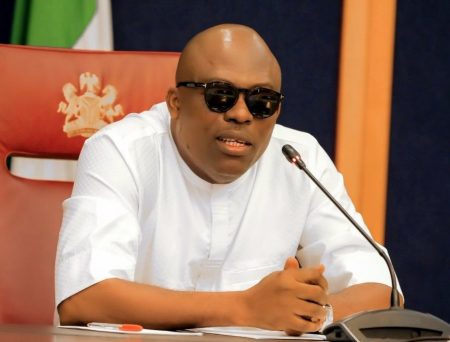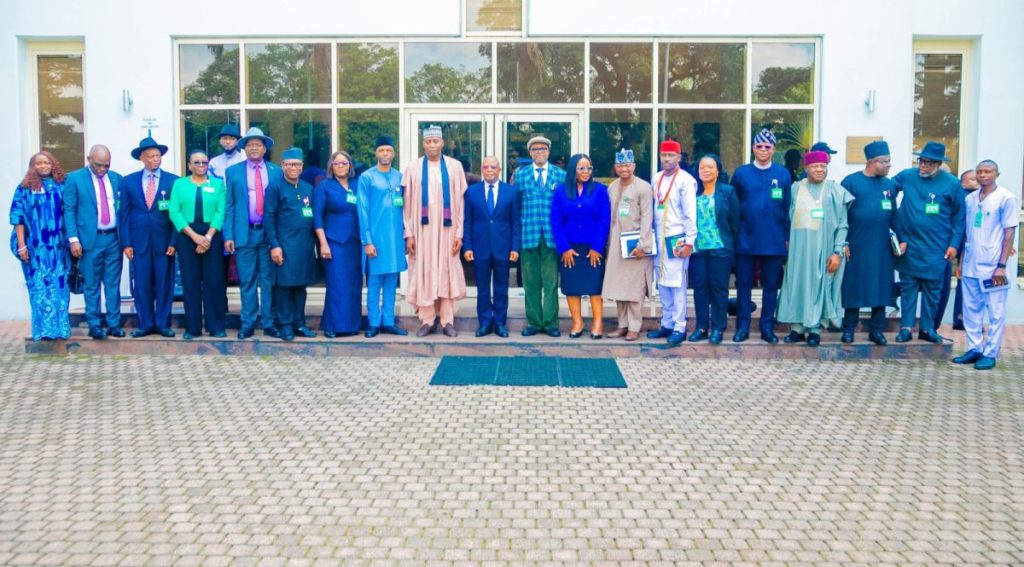
Port Harcourt — Rivers State Administrator, Vice Admiral (Rtd.) Ibok-Ete Ekwe Ibas, has issued a compelling call for innovative approaches to unlock Nigeria’s blue economy potential, estimated at over $296 million annually. The former naval chief made the declaration during a high-level meeting with policy experts from the National Institute for Policy and Strategic Studies (NIPSS) at Government House, Port Harcourt.
Strategic Shift from Oil Dependency
Addressing Study Group 7 of NIPSS Executive Course 47, Ibas emphasized the urgent need to diversify Nigeria’s economy beyond petroleum resources. “Our marine assets represent an untapped goldmine that could generate thousands of jobs, enhance food security, and build climate resilience while creating sustainable revenue streams,” the Administrator stated.
The blue economy framework outlined by Ibas encompasses fisheries, marine tourism, offshore renewable energy, biotechnology, and coastal infrastructure development. He stressed that realizing this potential requires “a fundamental shift from extractive practices to regenerative, innovation-driven solutions.”
Rivers State: Nigeria’s Blue Economy Powerhouse
With compelling statistics, Ibas positioned Rivers State as the natural hub for Nigeria’s blue economy revolution:
– 853km coastline (30% of Nigeria’s total)
– 40% of national crude oil/gas output
– 33% contribution to GDP and forex earnings
– Host to 416 oil wells, two major seaports, and Africa-class NLNG facility
However, the Administrator acknowledged significant challenges including marine pollution, coastal erosion, illegal refining activities, and maritime security threats that require immediate attention.
Sustainable Development Roadmap
The Rivers State government is pursuing an ambitious reform agenda focusing on:
– Institutional capacity building
– Integrated coastal zone management
– Multi-agency collaboration frameworks
– Strategic partnerships in maritime education and aquaculture.
“We’re embedding sustainability into our development DNA from inception,” Ibas explained, revealing ongoing discussions for port modernization and ocean energy projects.
Vice Admiral A.A. Mustapha, leading the NIPSS delegation, confirmed their study tour aligns with the 2025 national theme on blue economy development. “Our findings will directly inform policy recommendations to the Presidency,” Mustapha noted, praising Rivers State’s leadership in maritime economic planning.
The administration pledged to:
– Finalize a state-specific blue economy implementation plan by Q4 2025
– Establish a dedicated maritime innovation fund
– Host a regional stakeholders summit before year-end
With its strategic assets and proactive leadership, Rivers State appears positioned to drive Nigeria’s blue economy transformation – potentially creating a new economic paradigm beyond oil dependence.